Beige Soft Minimalist Apartment in Moscow, 48 m²
A Quiet Apartment for City Living: Beige Soft Minimalism in 48 m²
This apartment shows how a compact footprint can become not just a functional home, but a calm, grown-up, and flexible interior designed with the future in mind. The space was created for a young man living independently in the city, but from the very beginning, the brief looked beyond his current lifestyle. The apartment needed to be suitable for hosting friends, accommodating overnight guests, and, in the future, adapting to the needs of a young family — a wife and a child.
The foundation of the project is beige soft minimalism: a warm, restrained, tactile interior free from visual noise, yet highly attentive to detail, materials, lighting, and built-in solutions.
Concept and Mood
The working title of the project is “The Quiet Rhythm of the City.”
The interior was conceived as a calm urban apartment — a place one wants to return to after an active day. There are no sharp contrasts, random decorative gestures, or excessive use of color. The atmosphere is built around a soft beige, grey, and brown palette, natural textures, diffused lighting, and clean geometry.
At the same time, the apartment does not feel impersonal. It has expressive accents: textured wall panels, vertical slats, stone with an active veining pattern, brass and bronze details, decorative lighting, and warm wood. Together, these elements make the interior not coldly minimalist, but soft, lived-in, and comfortable.
About the Apartment
The apartment is located in Moscow, on Otkrytoye Highway. It is a spacious one-bedroom apartment with an open-plan kitchen-living area, measuring 48 m².
The layout made it possible to include a full kitchen-living room, a separate bedroom, a bathroom, and an entrance hall with built-in storage. For an apartment of this size, it was important not to lose the feeling of air and openness: every centimeter had to work, while the interior still needed to avoid feeling cramped or overloaded with furniture.
The windows provide good natural light, and the design supports this feature through warm light tones, reflective surfaces, mirrors, and delicate lighting. As a result, the apartment feels more spacious and visually cohesive.
The Client and Interior Brief
The apartment was designed for a young man living independently in the city. However, from the start, it was important to consider not only his current lifestyle, but also possible future changes: a wife, a child, the need to host friends, and the option of an additional sleeping place.
The main request was for a modern, calm, refined interior that would not feel cold. The aim was to move away from a temporary “single-person apartment” solution and create a home that would remain relevant for years: without excessive decoration, without obvious trendy clichés, but with a strong sense of material quality and well-considered spatial architecture.
This is how the image of a beige soft minimalist apartment emerged — with a gentle palette, built-in furniture, carefully planned lighting, and a combination of stone, wood, textured plaster, textiles, and metal.
Main Functional Goals
The key objective was to make the apartment as flexible as possible.
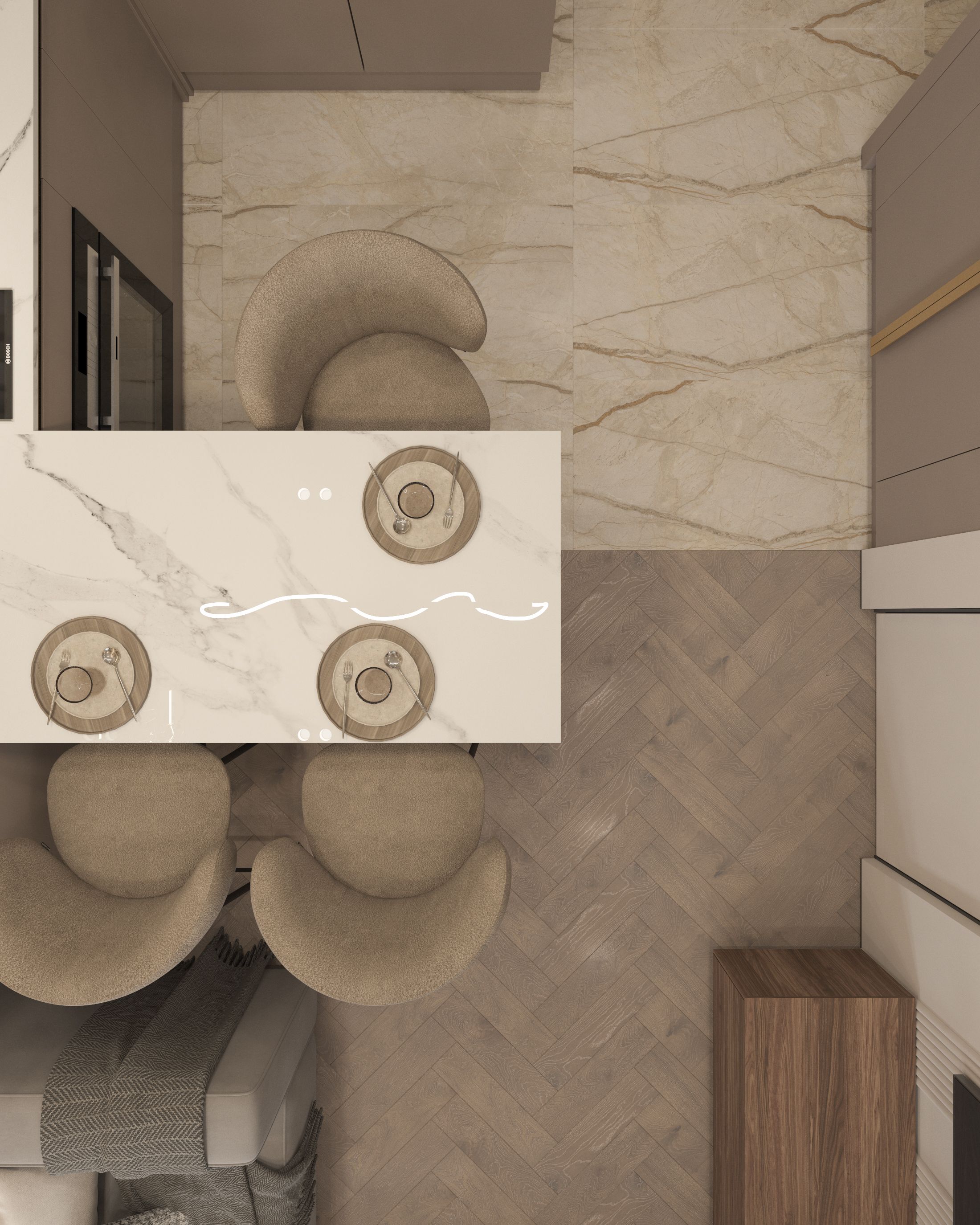
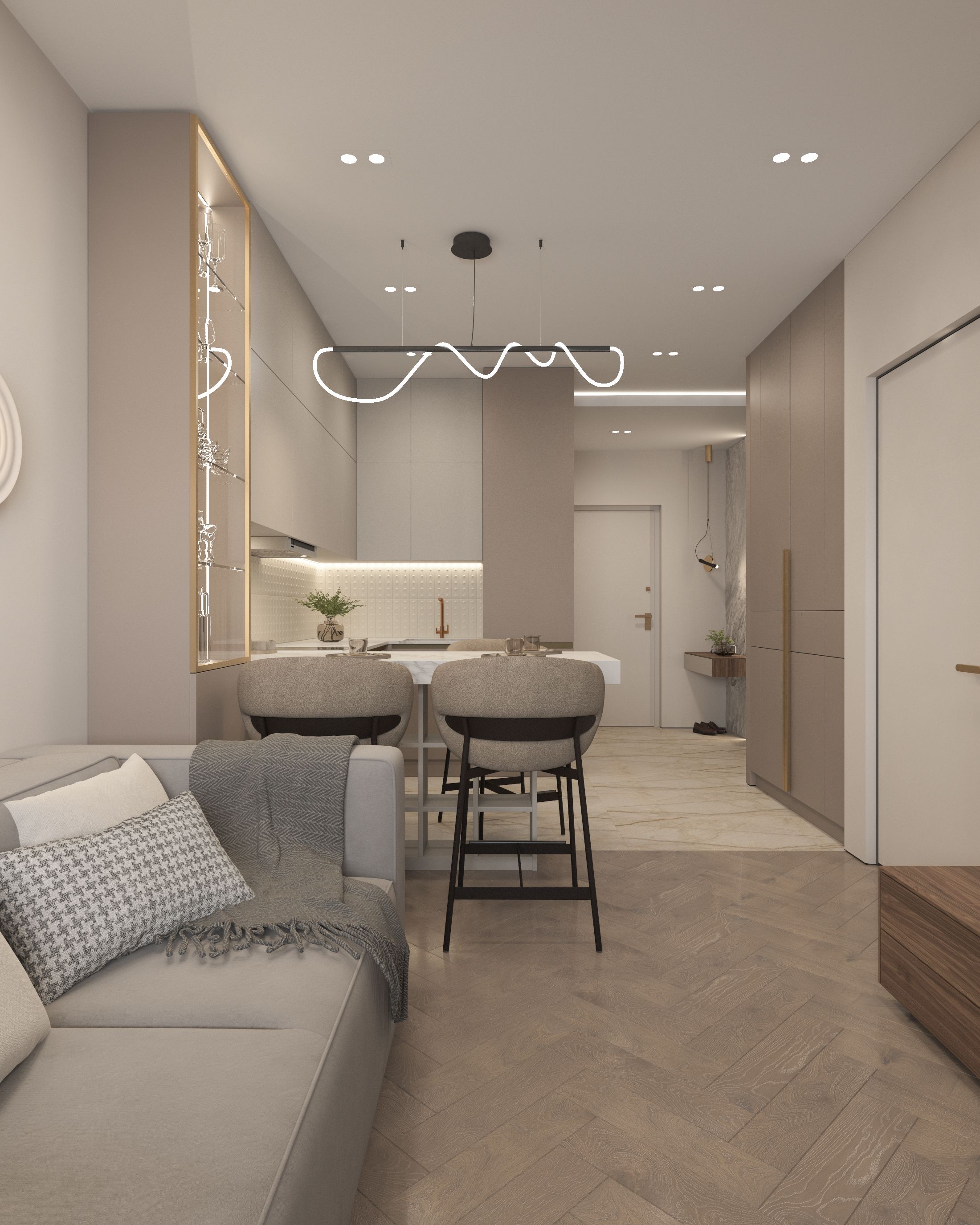
The kitchen-living room had to accommodate several functions at once: a fully equipped kitchen, an island or peninsula for cooking and quick breakfasts, a lounge area with a sofa, an additional sleeping place, an area for socializing with friends, and a visually light dining setup.
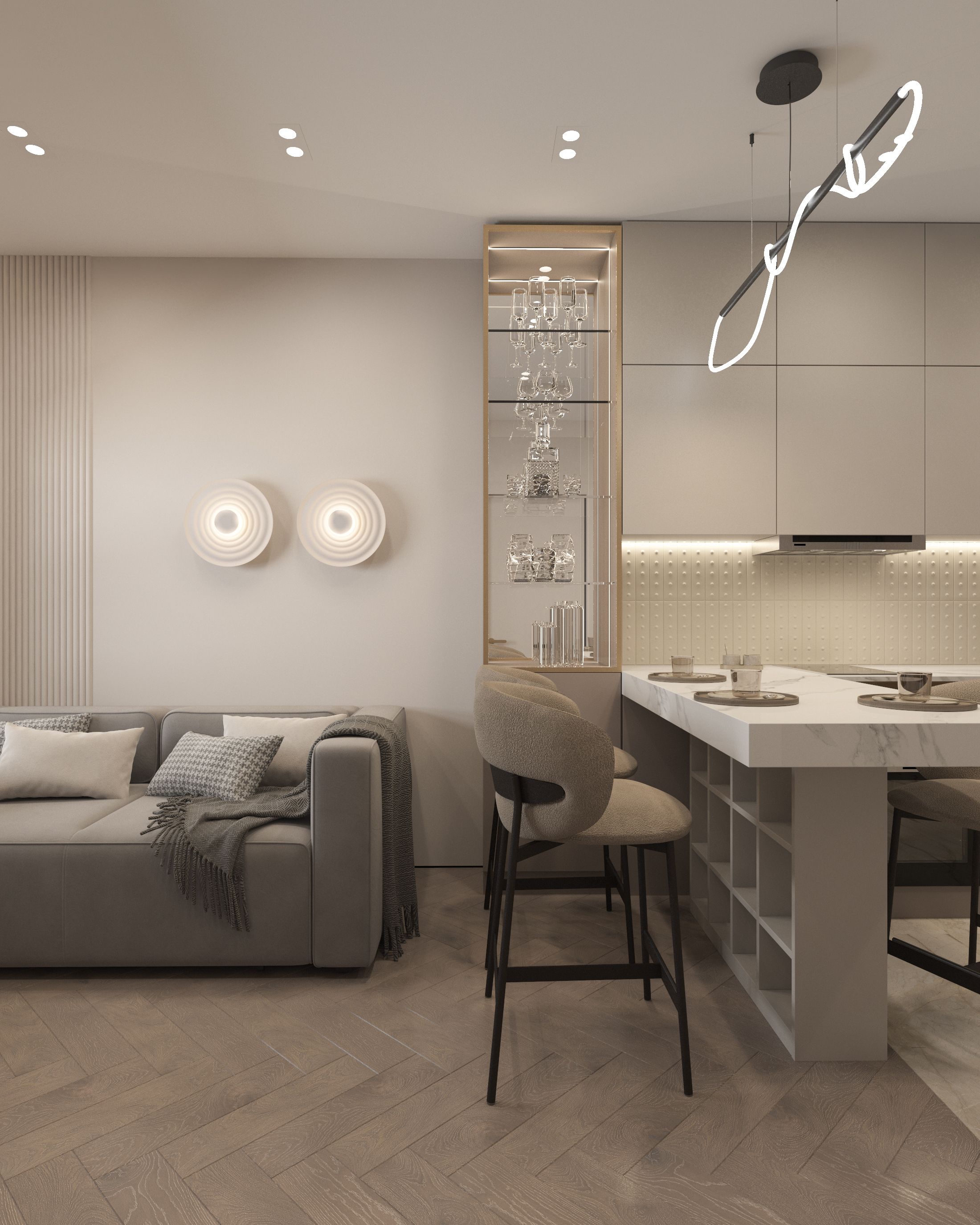
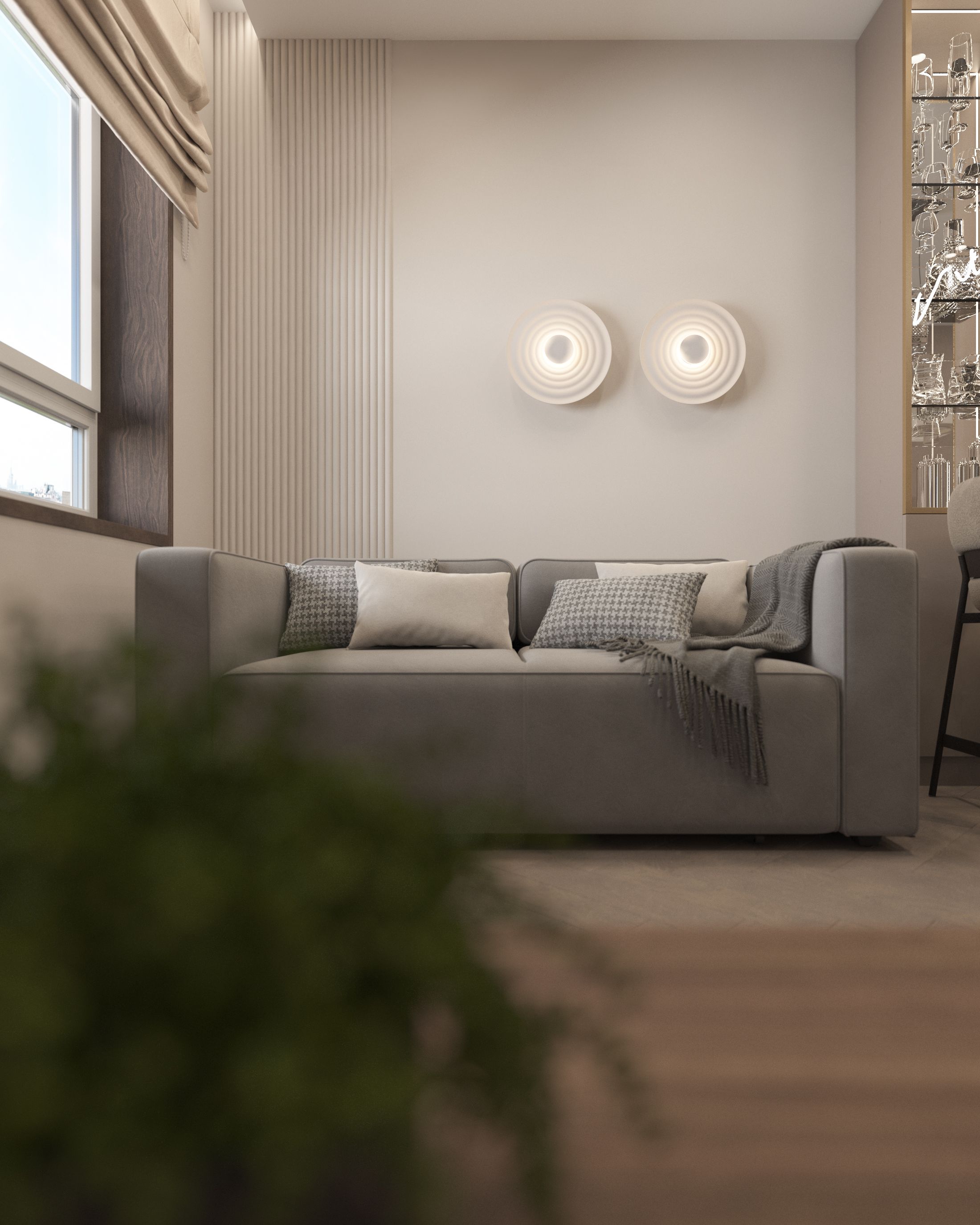
The sofa in the living room serves two purposes: during the day, it is a place to relax; in the evening, it becomes an area for watching TV or spending time with guests; and when needed, it can function as an extra sleeping place.
The kitchen had to be compact yet fully functional, with sufficient storage, work surface, built-in appliances, and comfortable seating at the island.
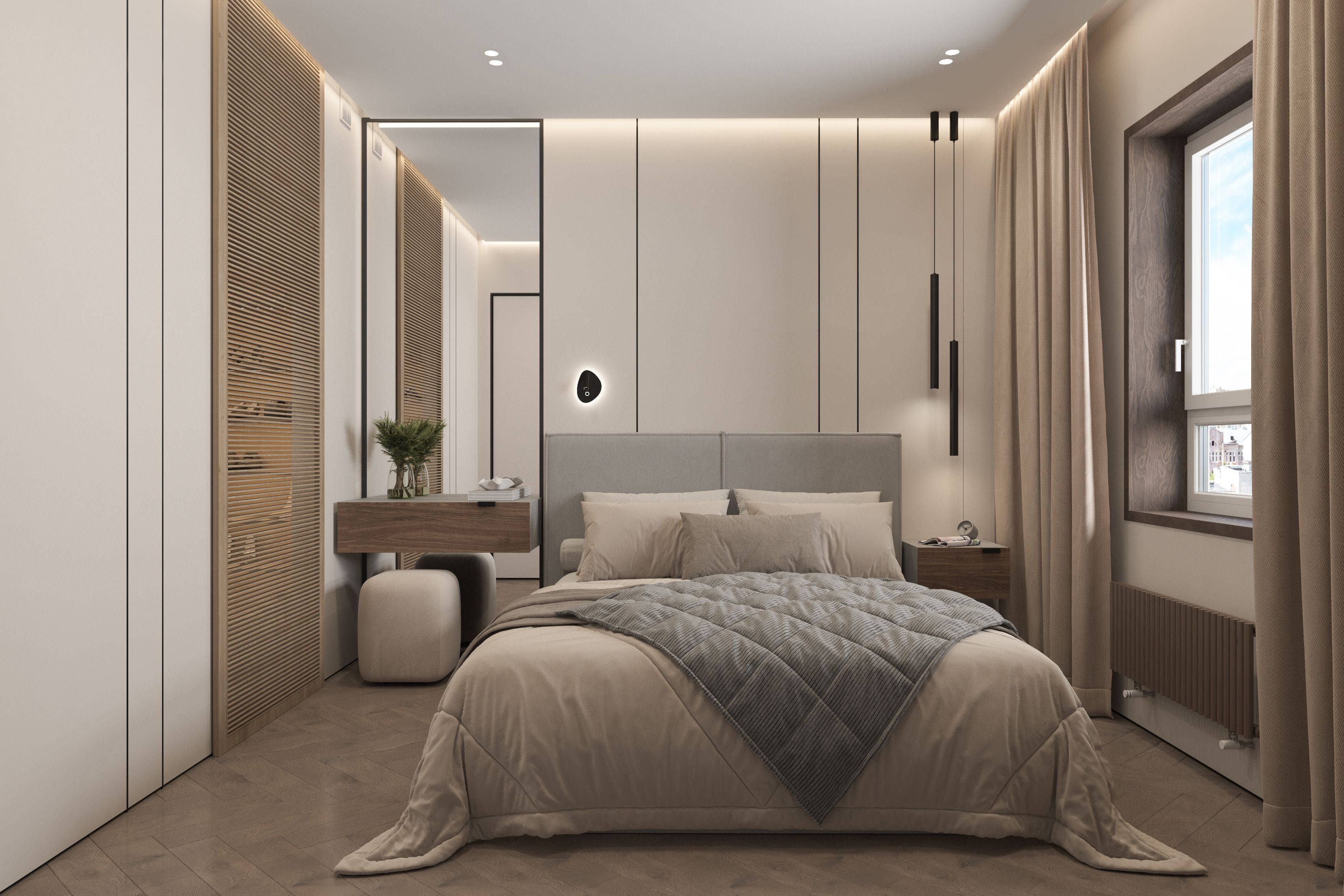
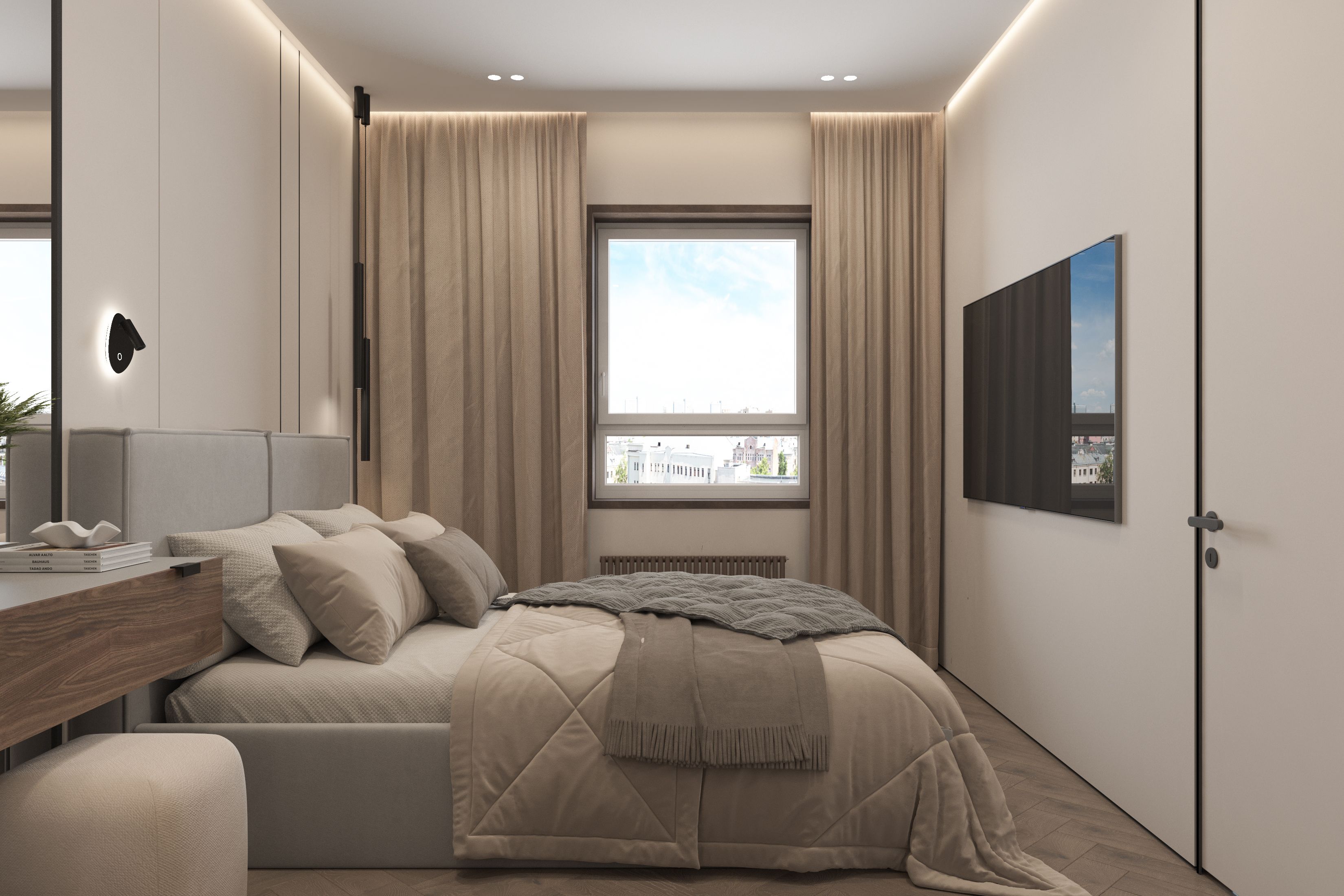
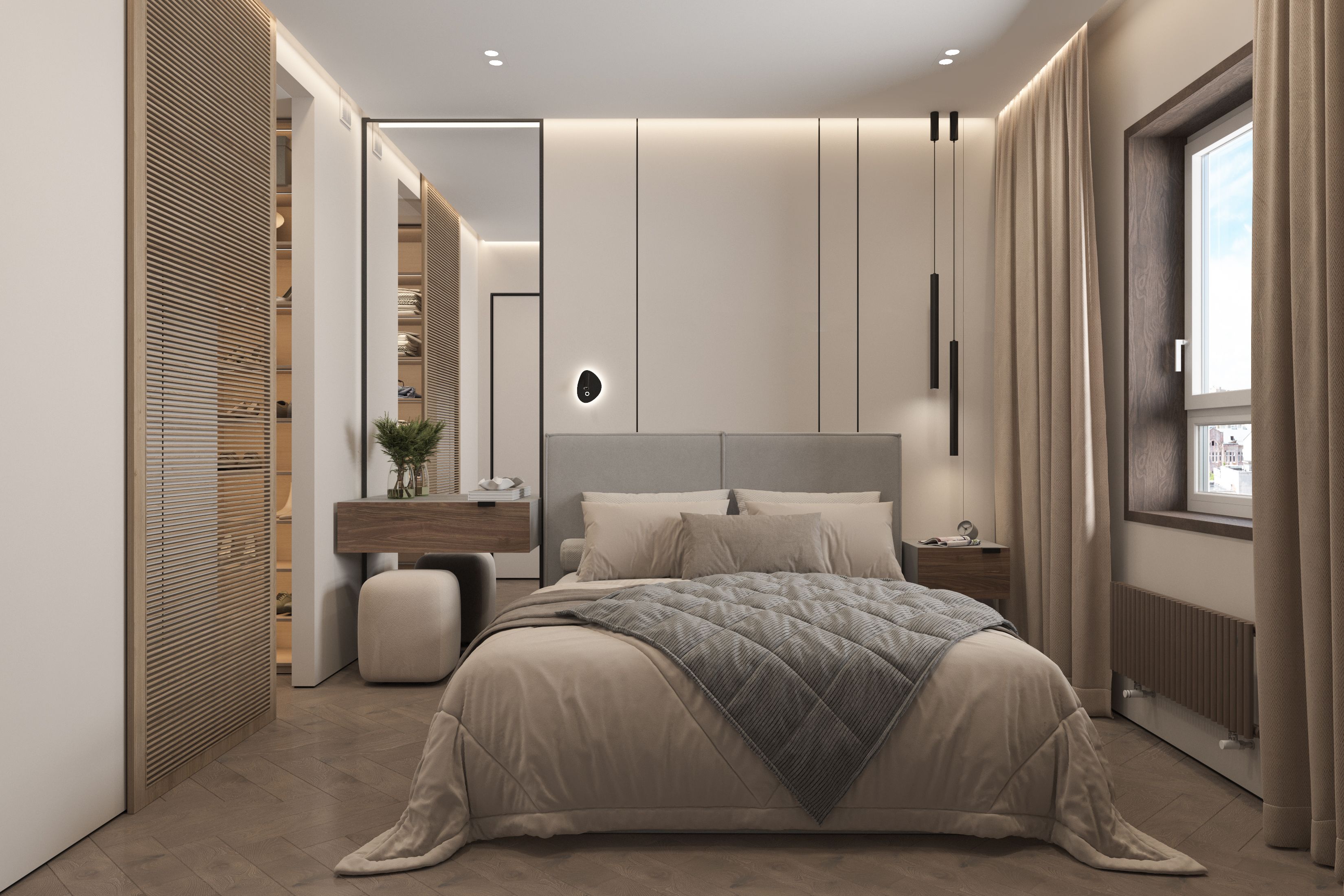
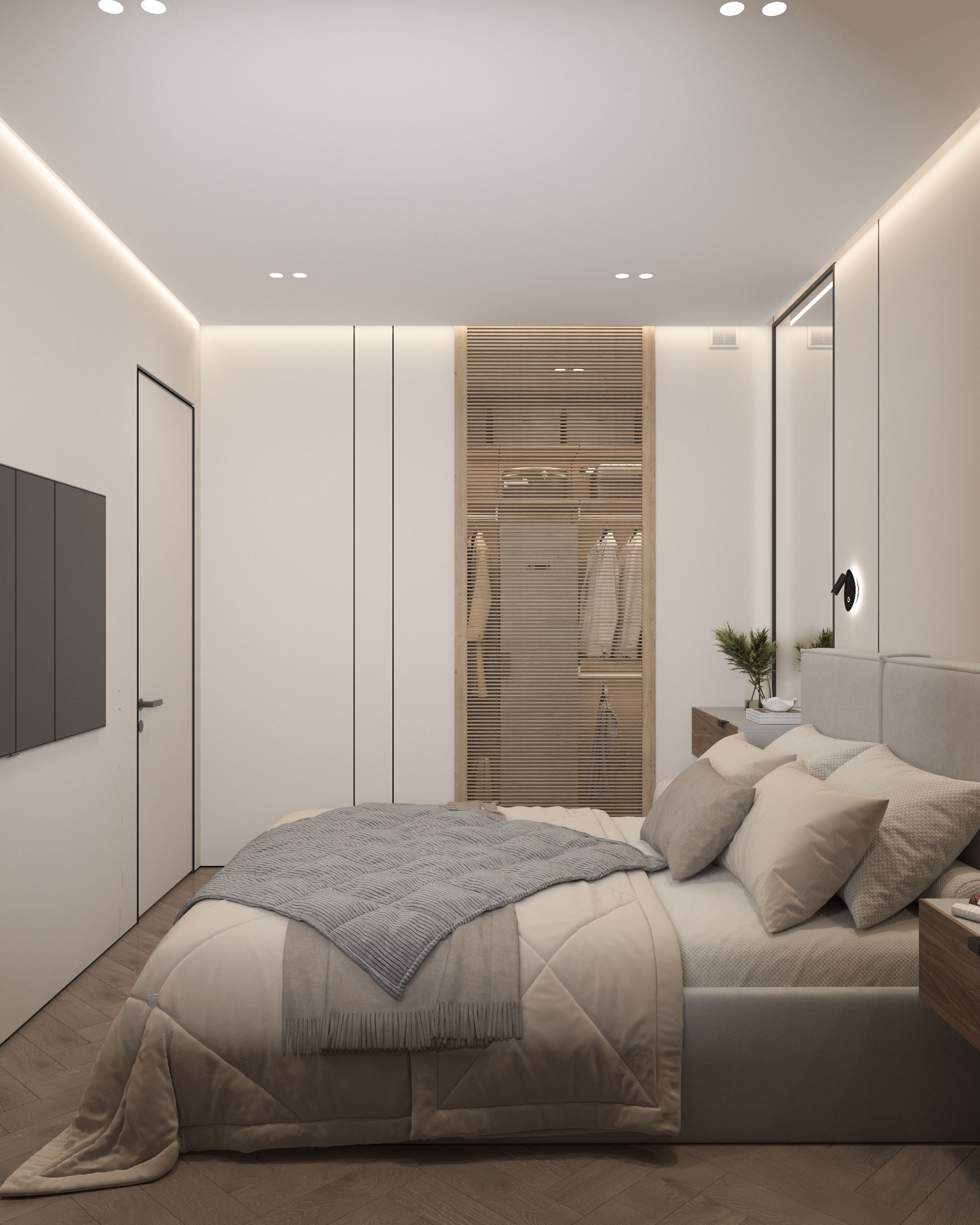
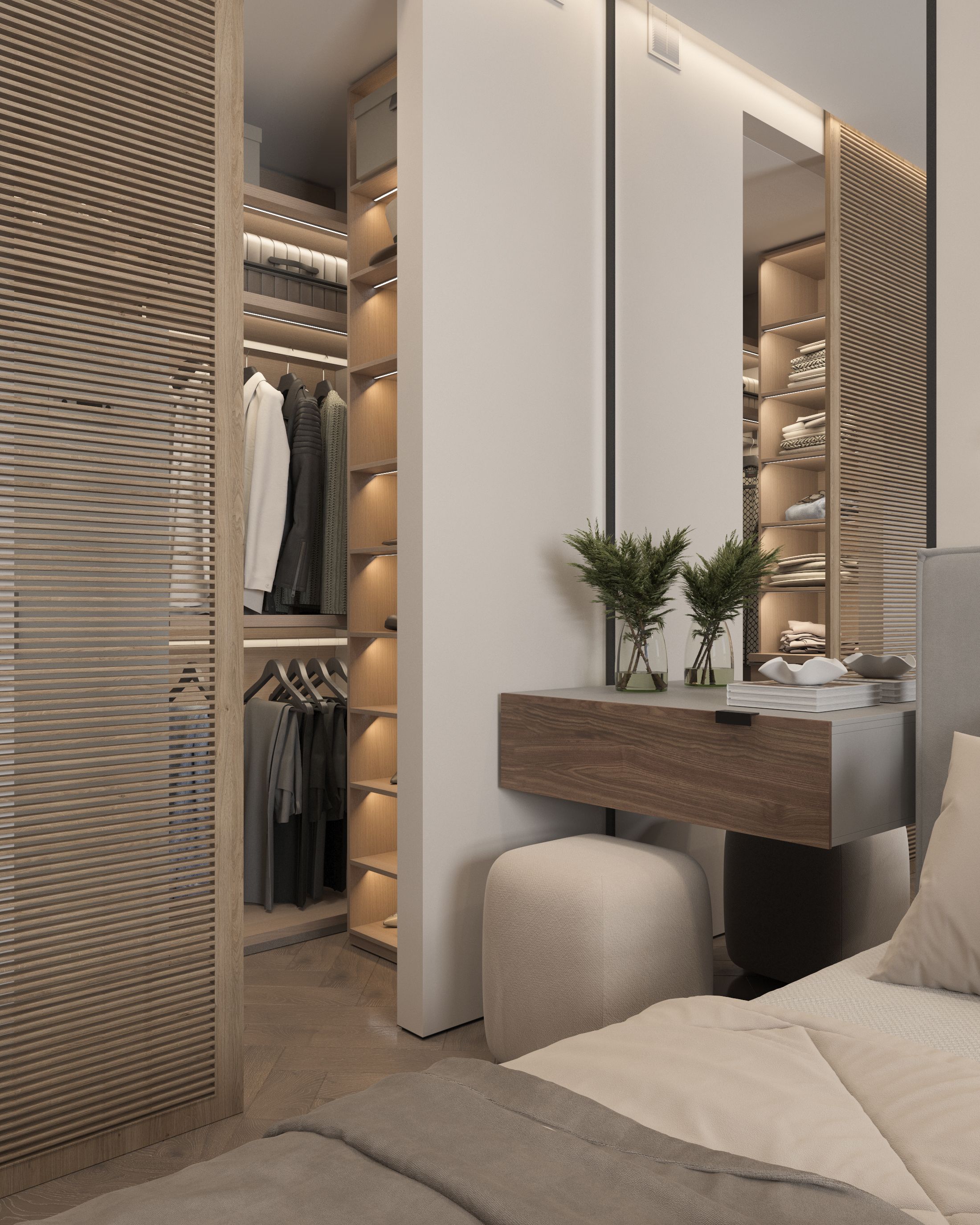
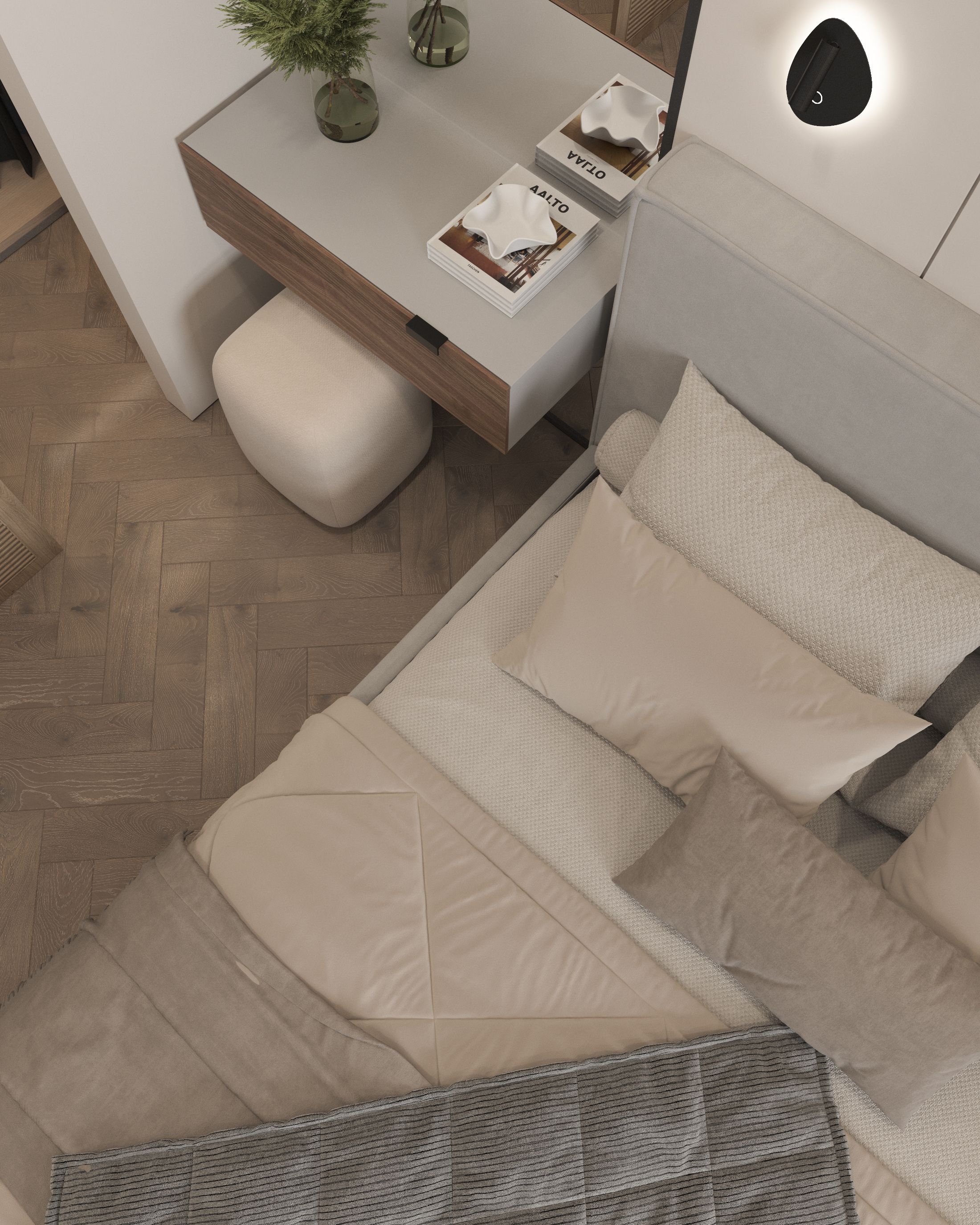
In the bedroom, it was important to create a more private and softer atmosphere. The room includes a full-size bed, bedside tables, pendant lights, a spacious wardrobe, and a work/vanity area by the mirror.
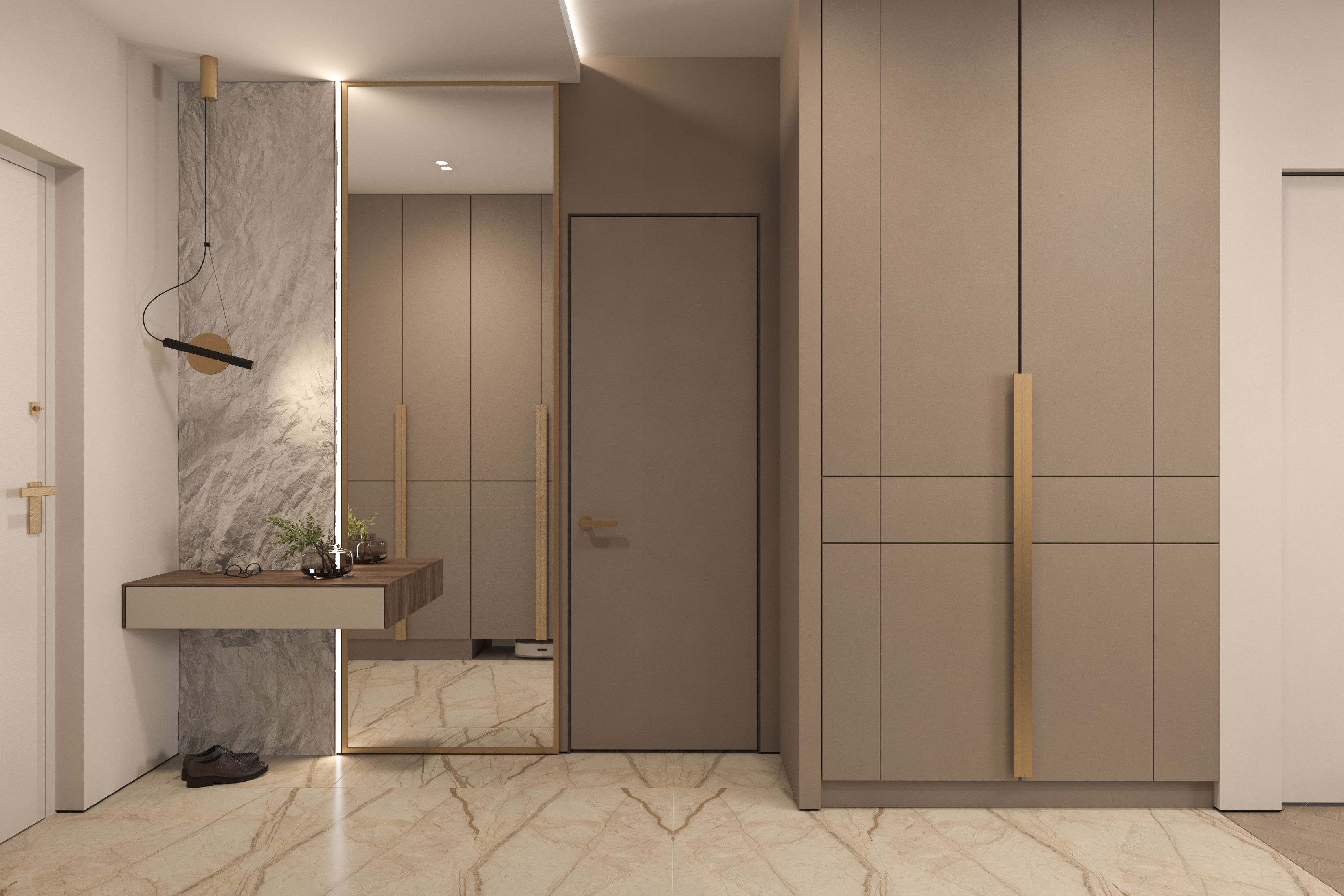
The entrance hall required storage for outerwear, shoes, household items, and small everyday objects, while still avoiding a purely utilitarian feel.
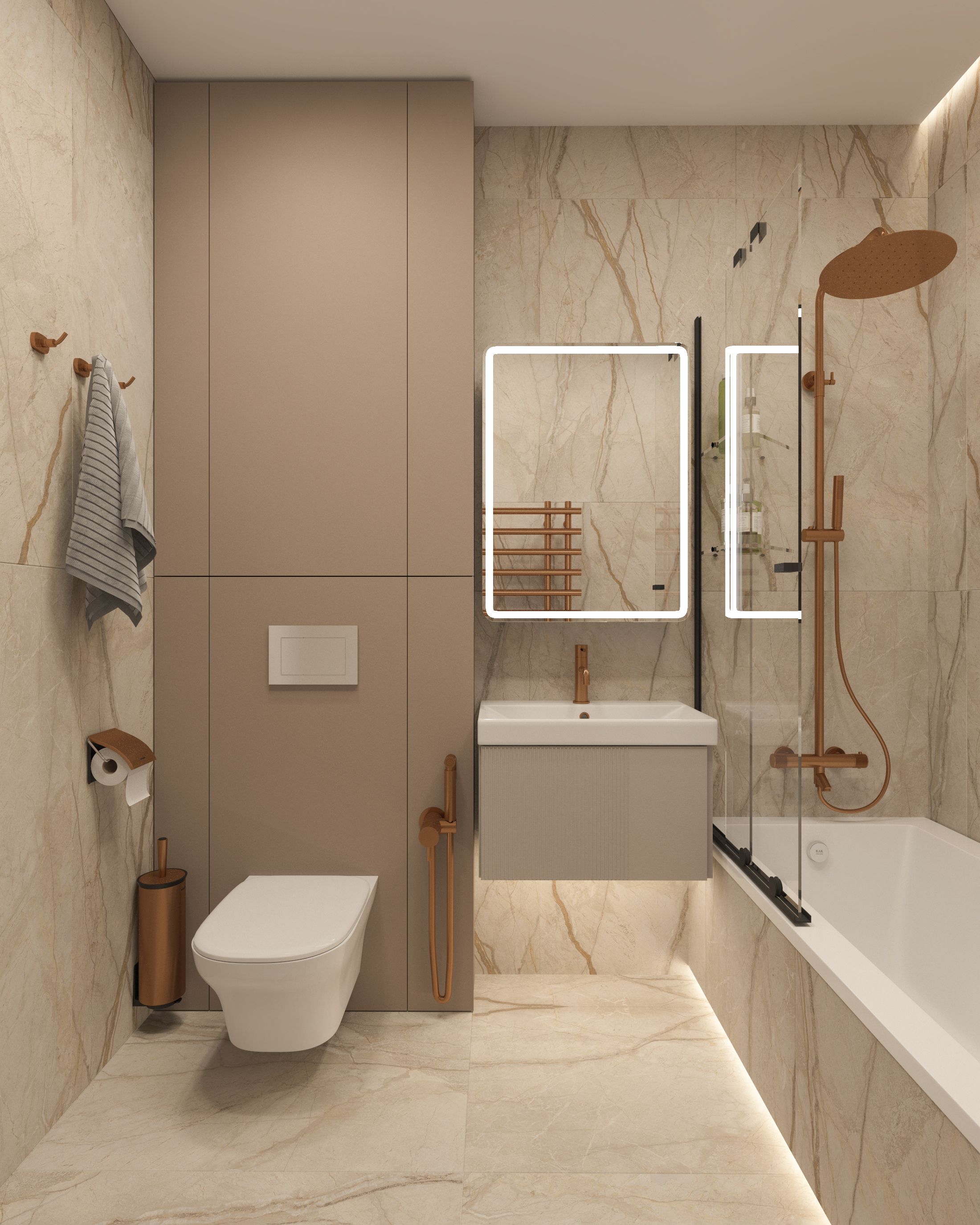
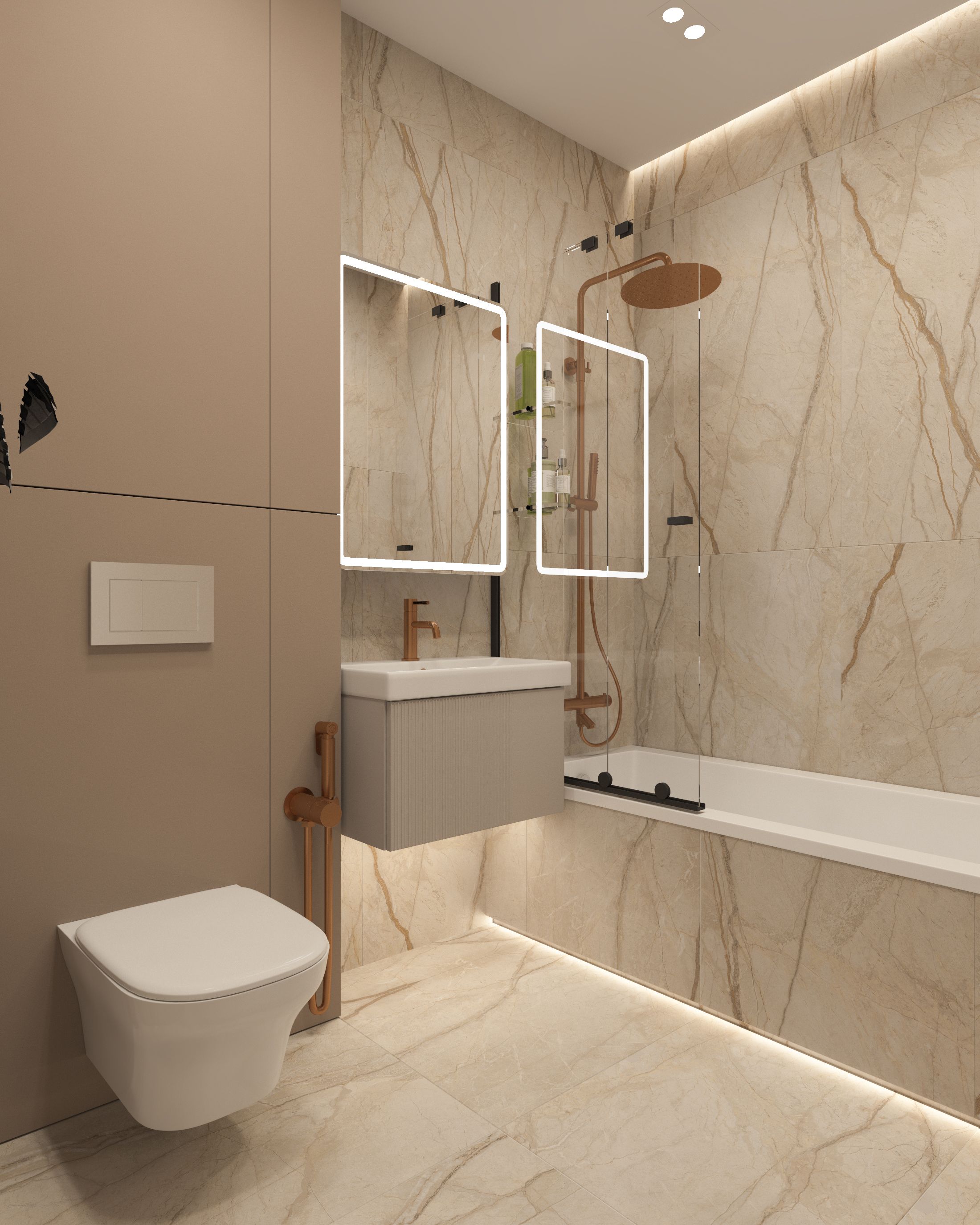
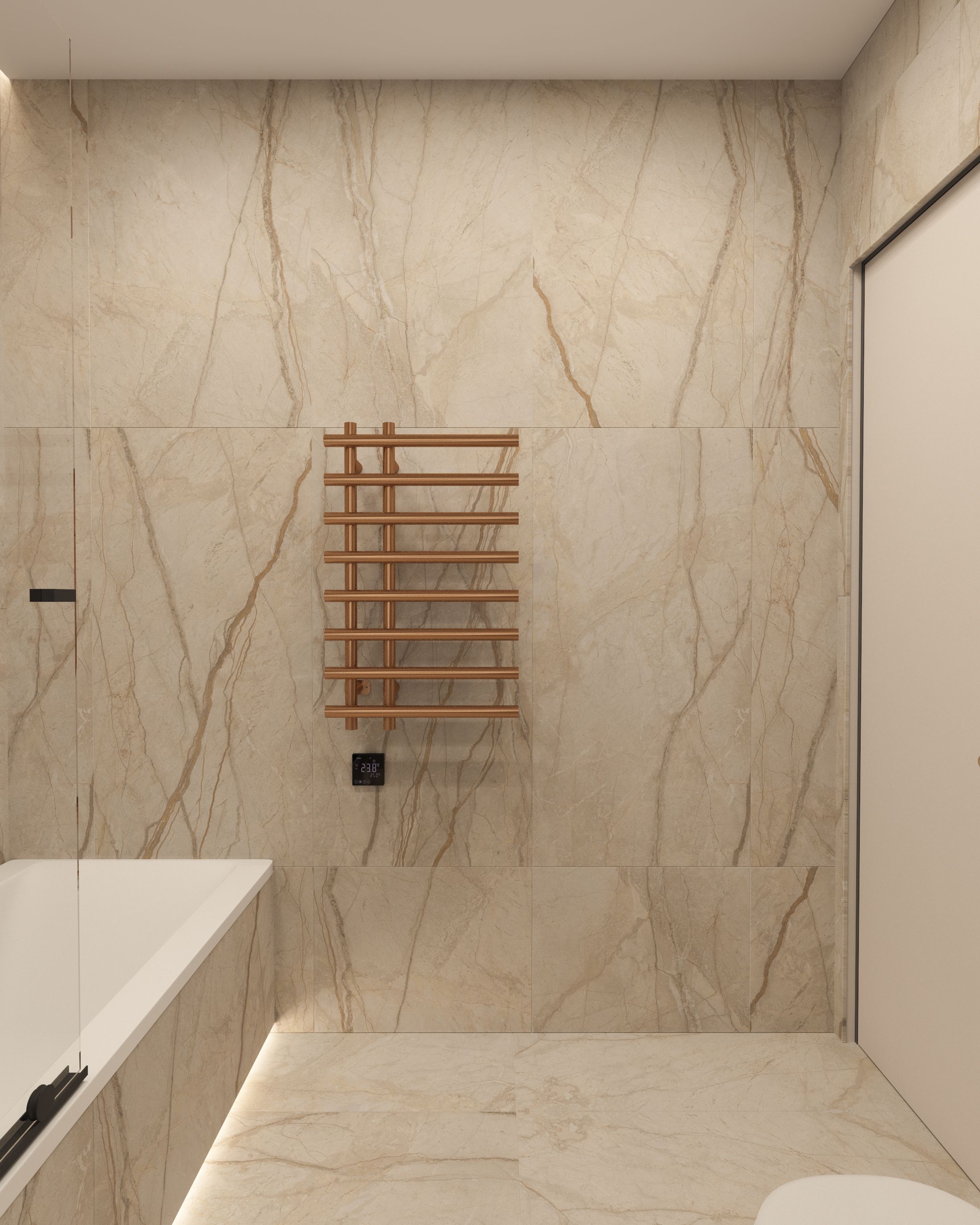
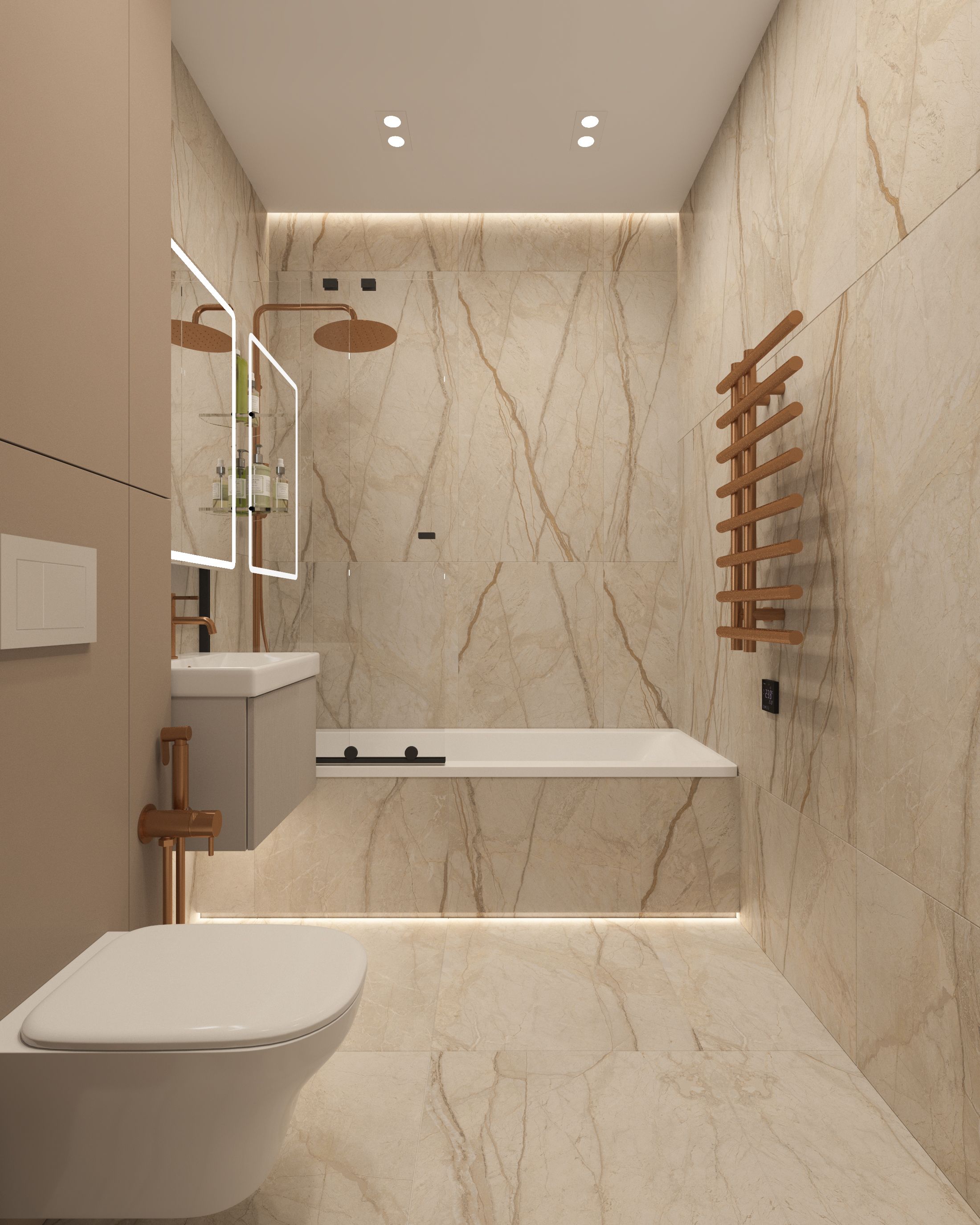
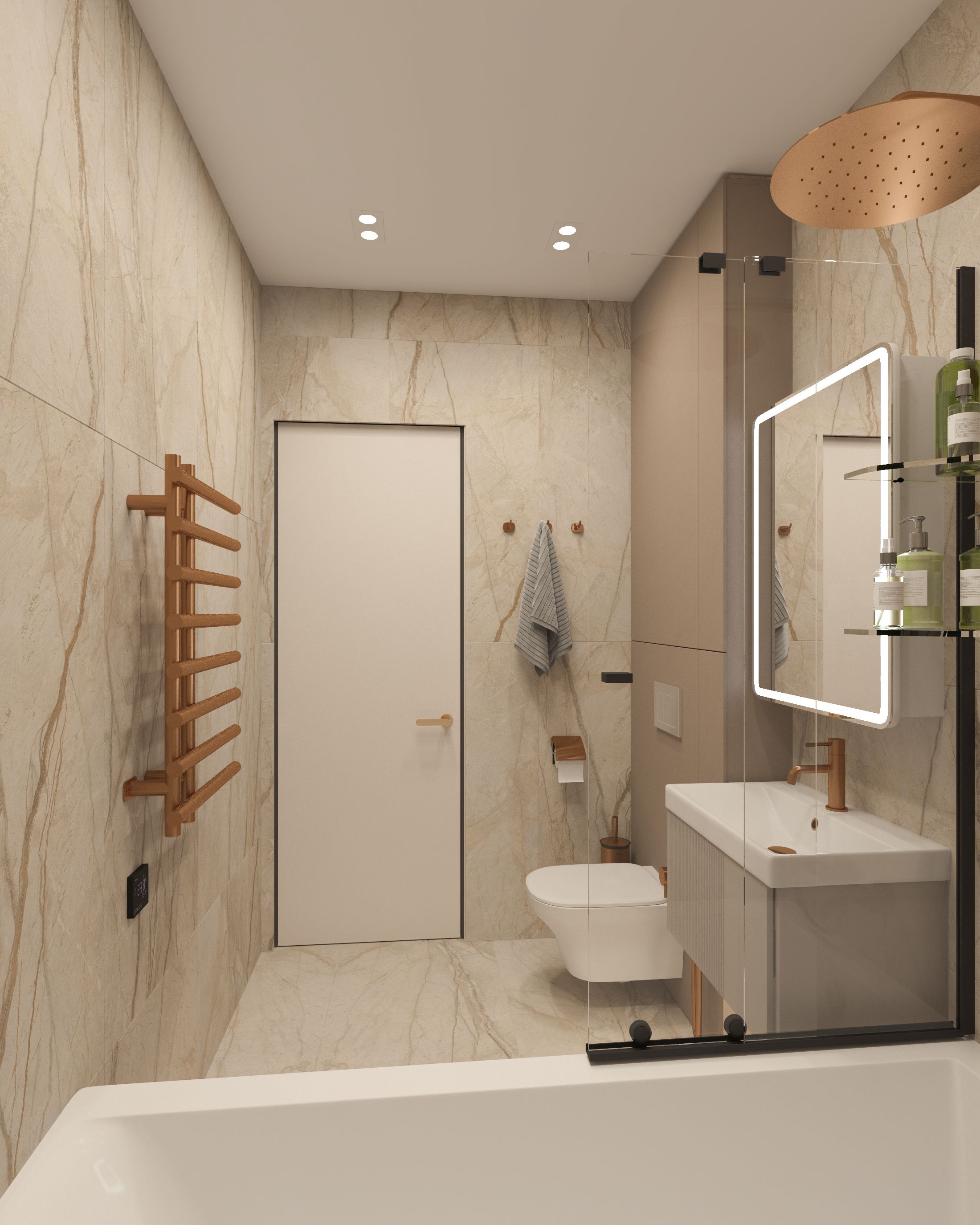
In the bathroom, the task was to combine a bathtub, shower screen, vanity unit, concealed toilet system, storage, and a decorative look consistent with the rest of the apartment.
Layout and Planning
No radical replanning was required. The apartment originally had a fairly logical structure for this type of layout: a shared kitchen-living area, a separate bedroom, an entrance hall, and a bathroom.
The main work was not about moving walls, but about precisely organizing scenarios within each room. We worked with furniture, built-in storage, lighting, and finishes to visually zone the space and make it more comfortable.
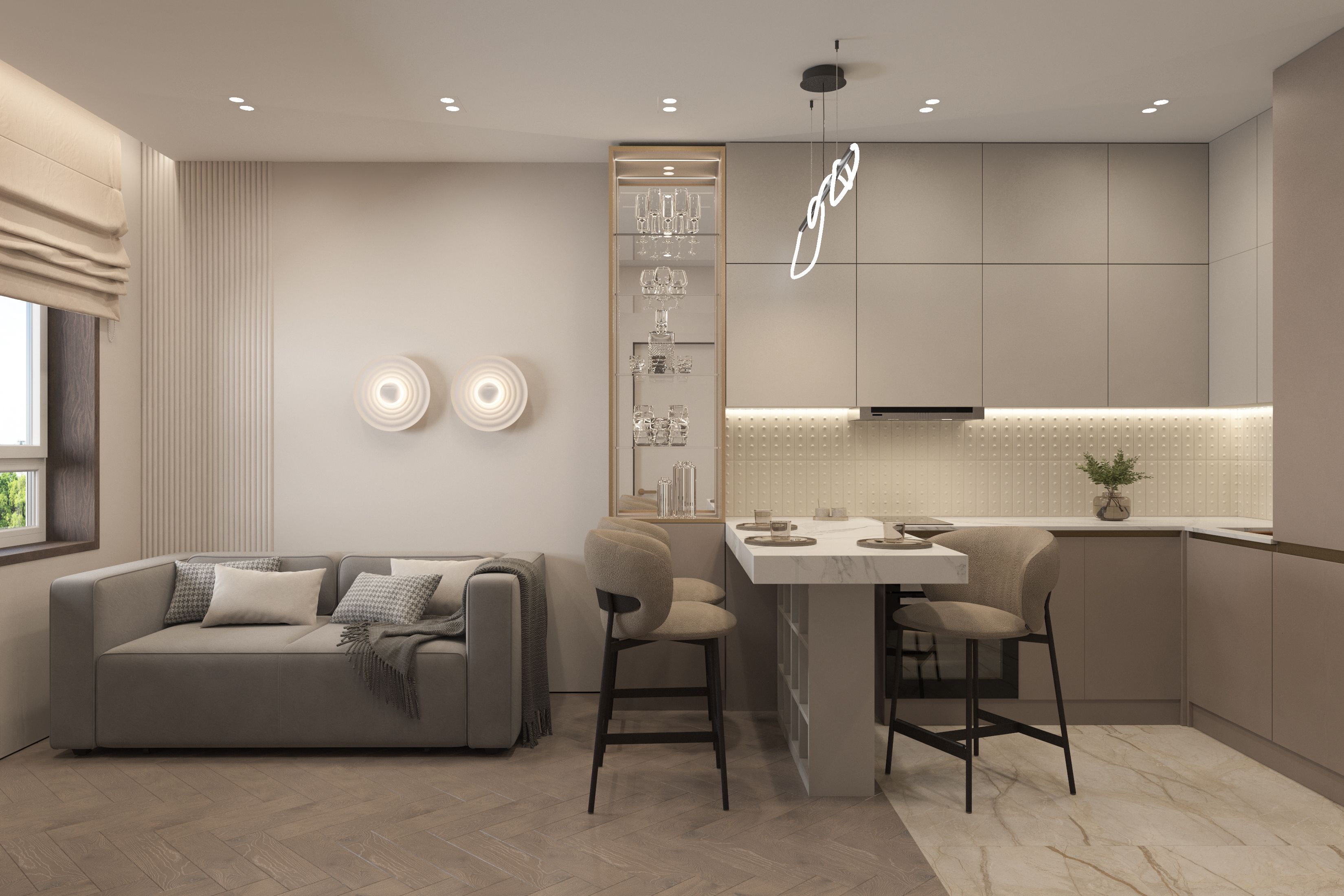
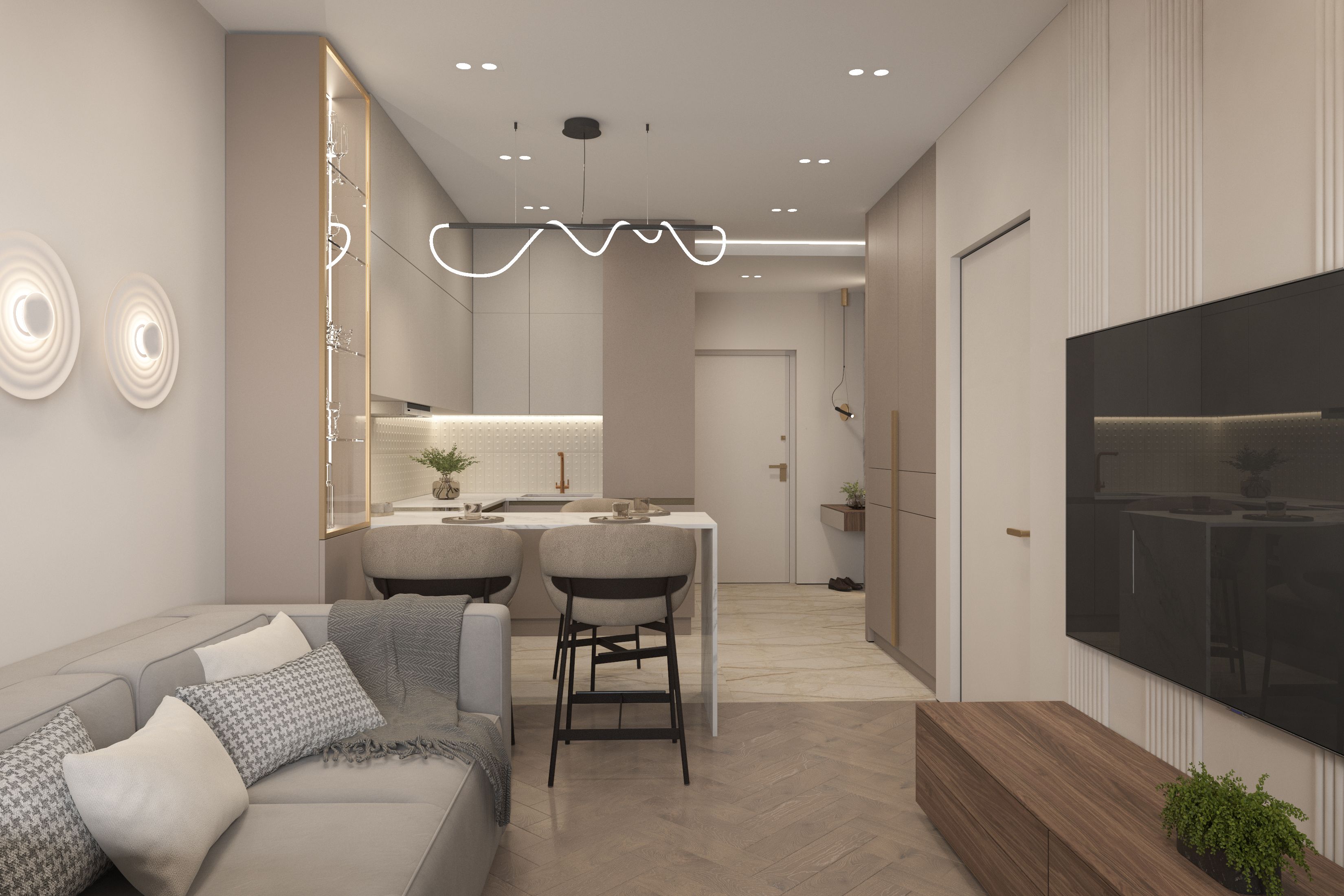
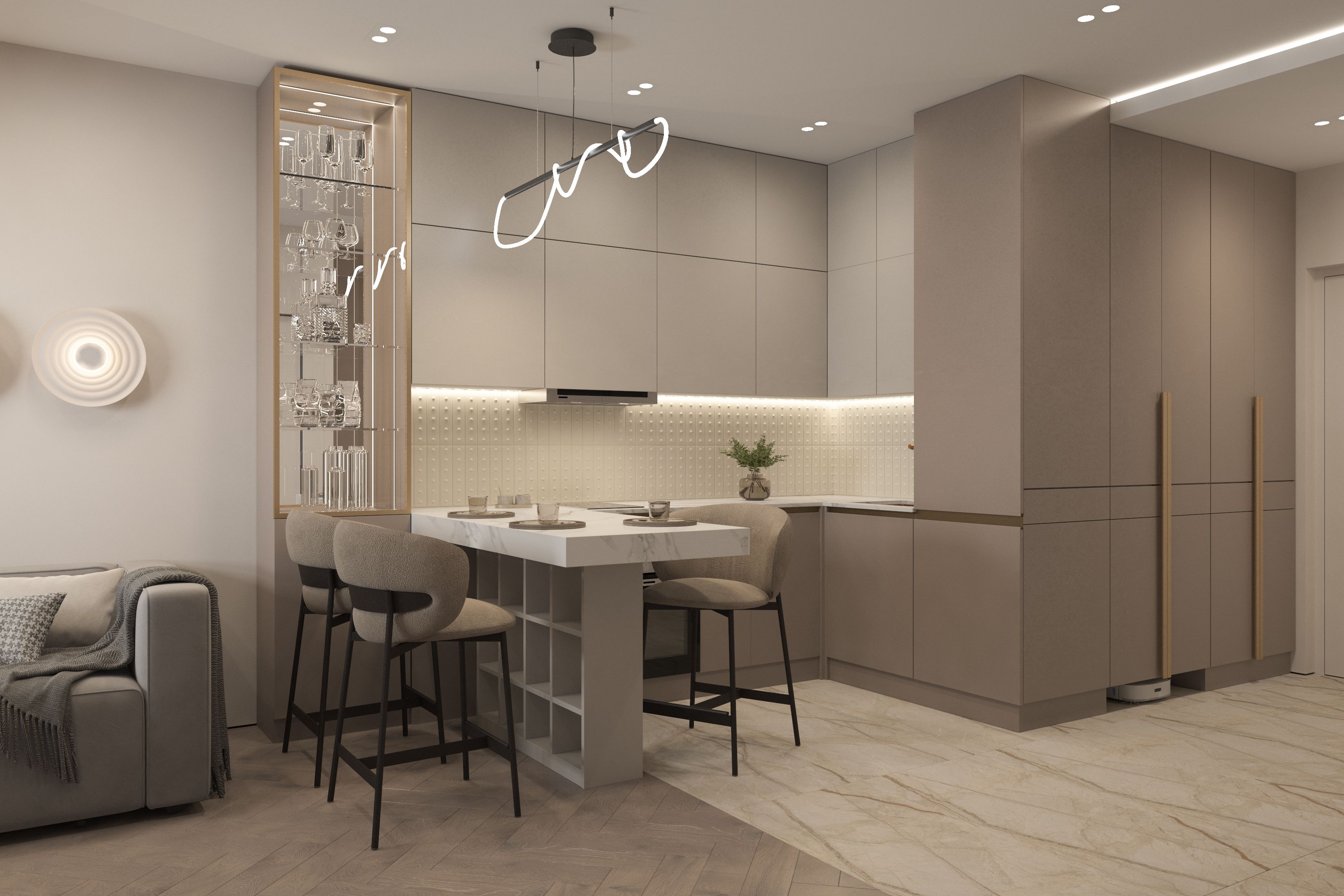
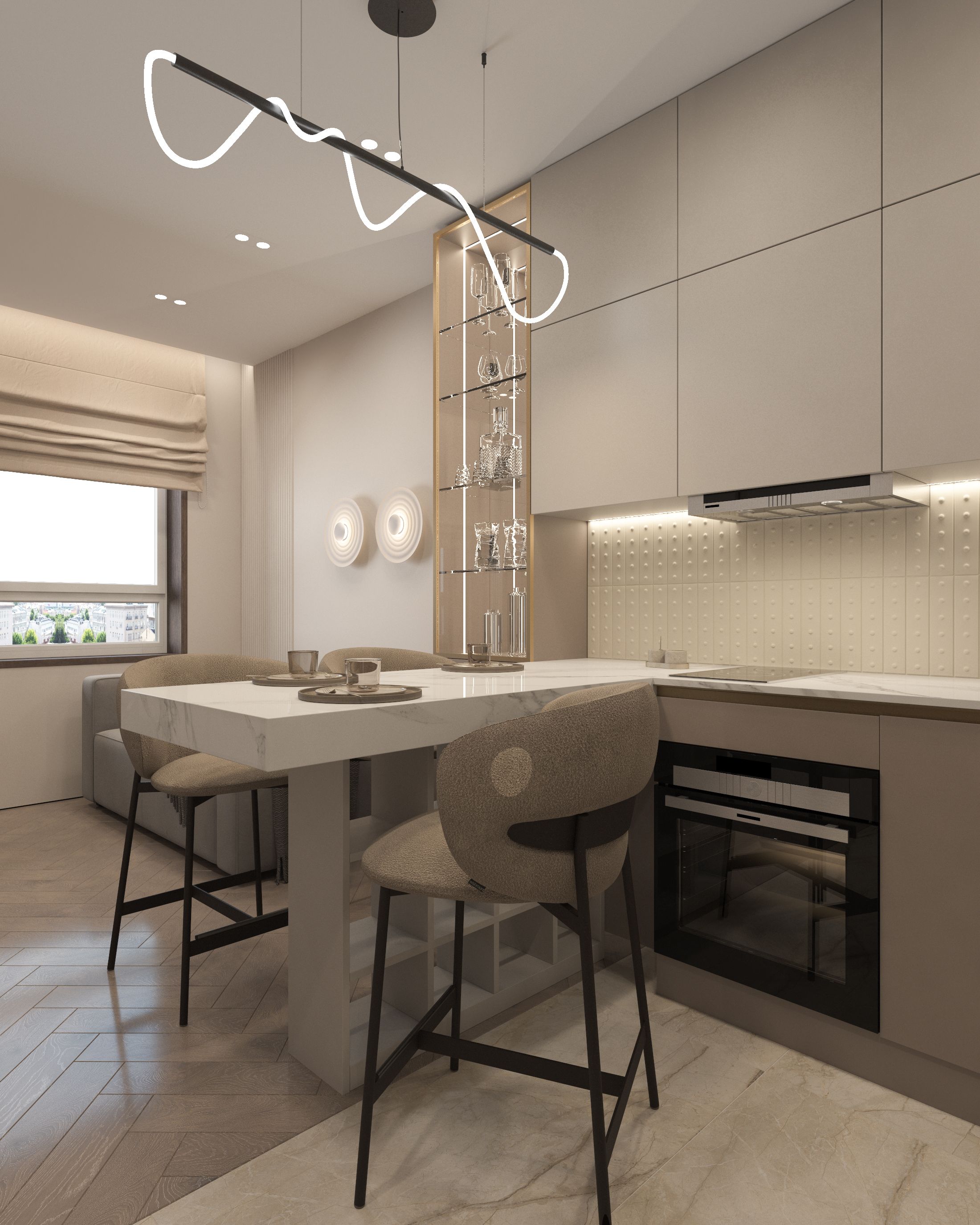
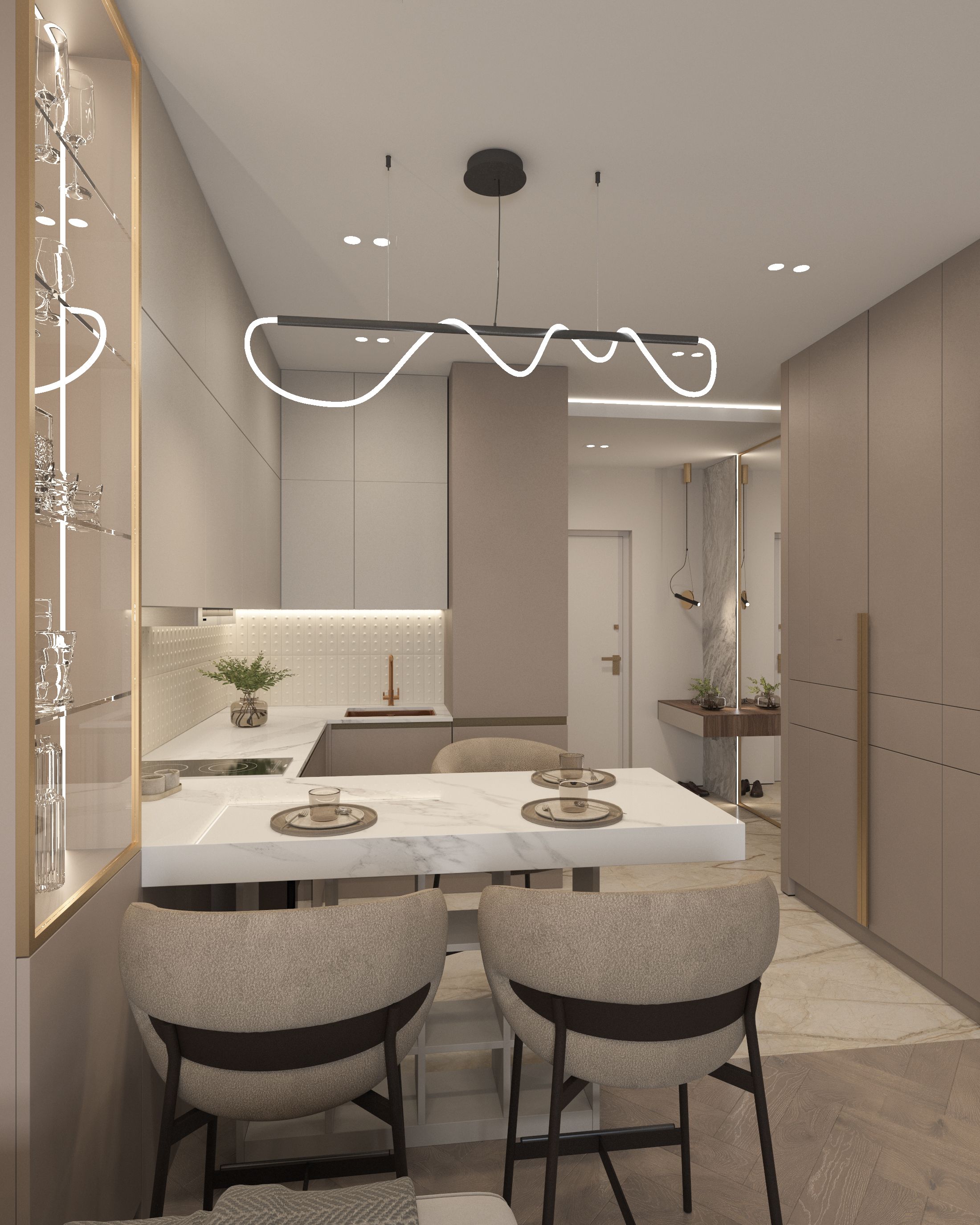
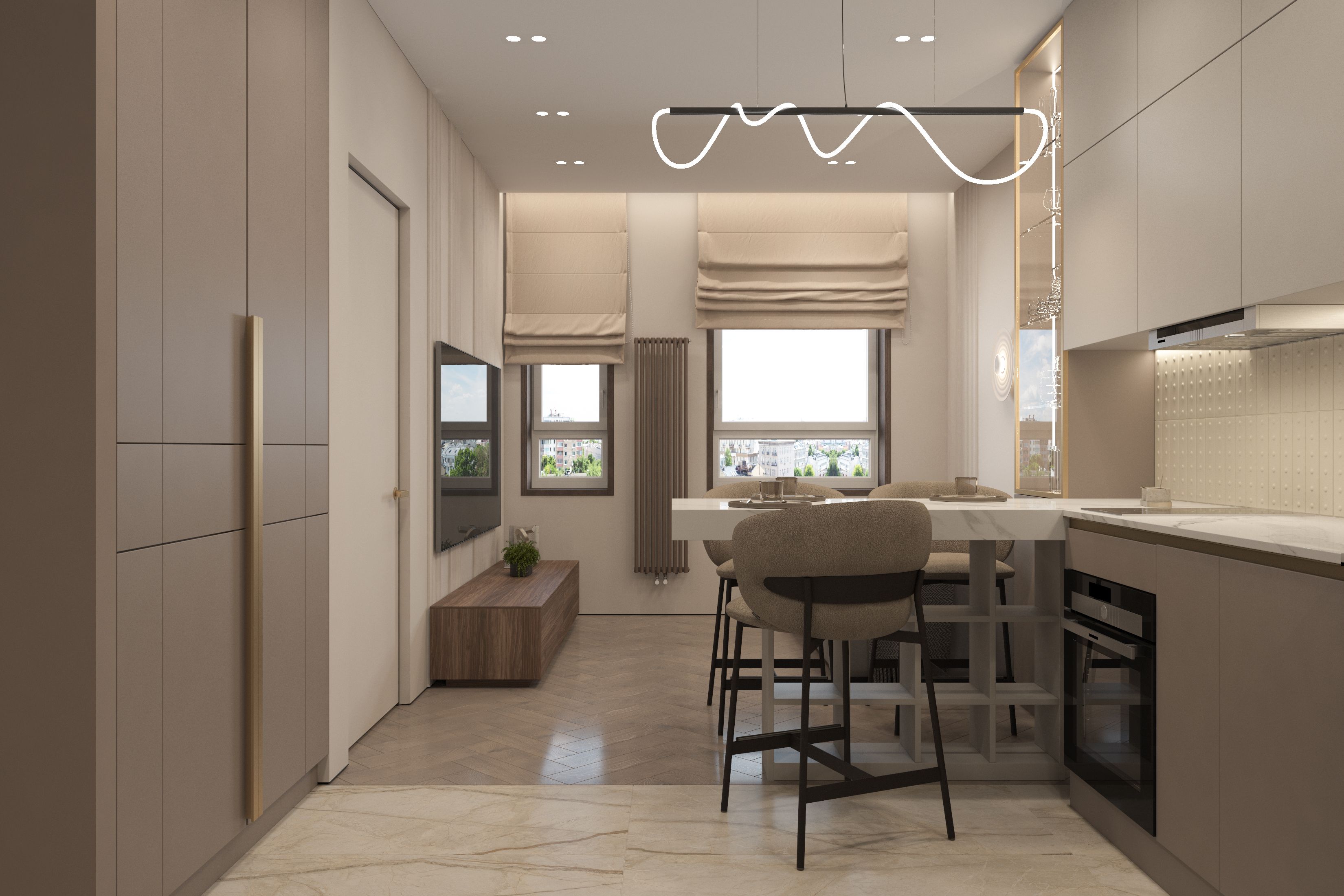
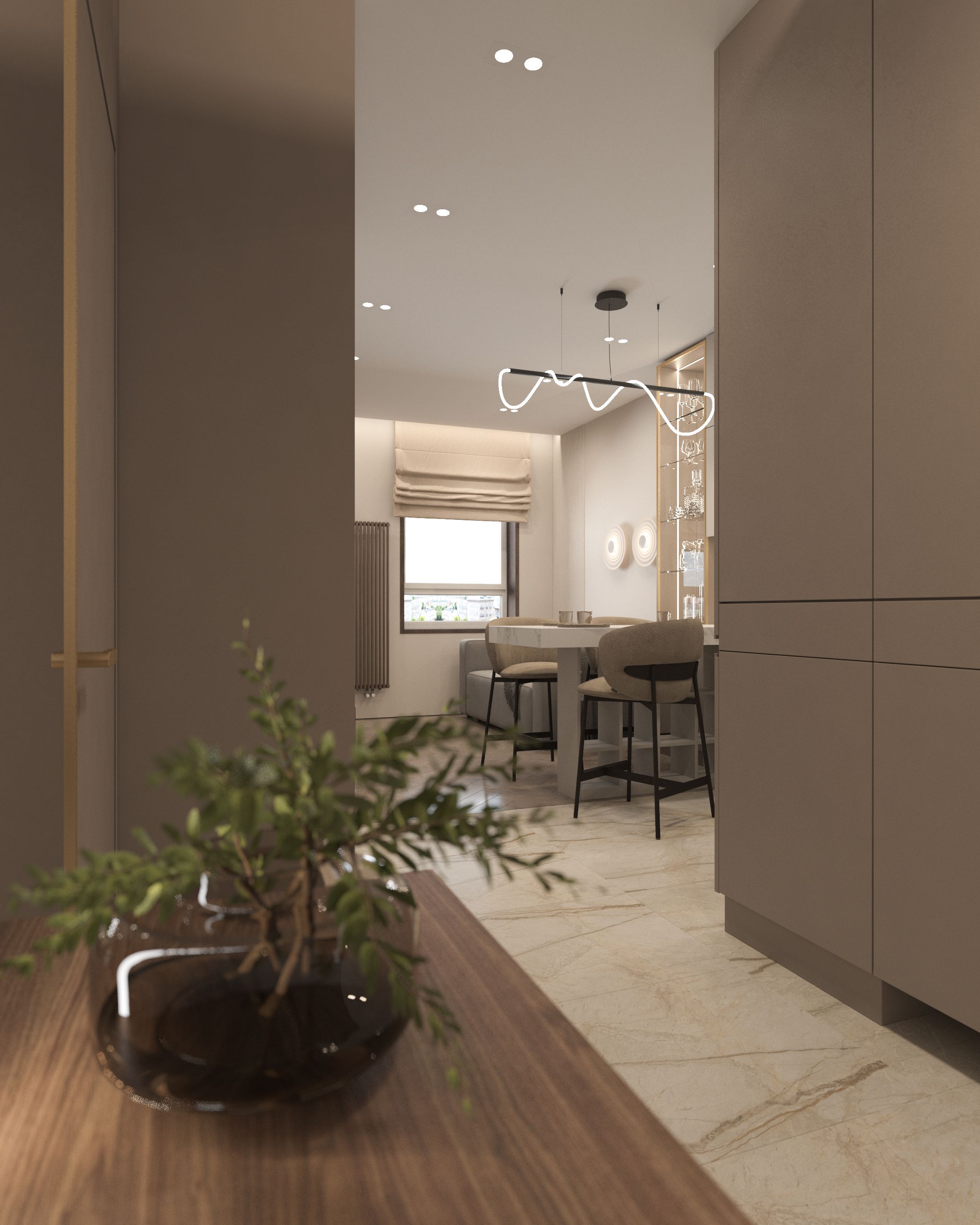
The kitchen-living room is divided not by partitions, but by function: the kitchen run, island, sofa area, decorative display cabinet, and lighting scenarios create a clear structure within the room. At the same time, the space remains open and cohesive.
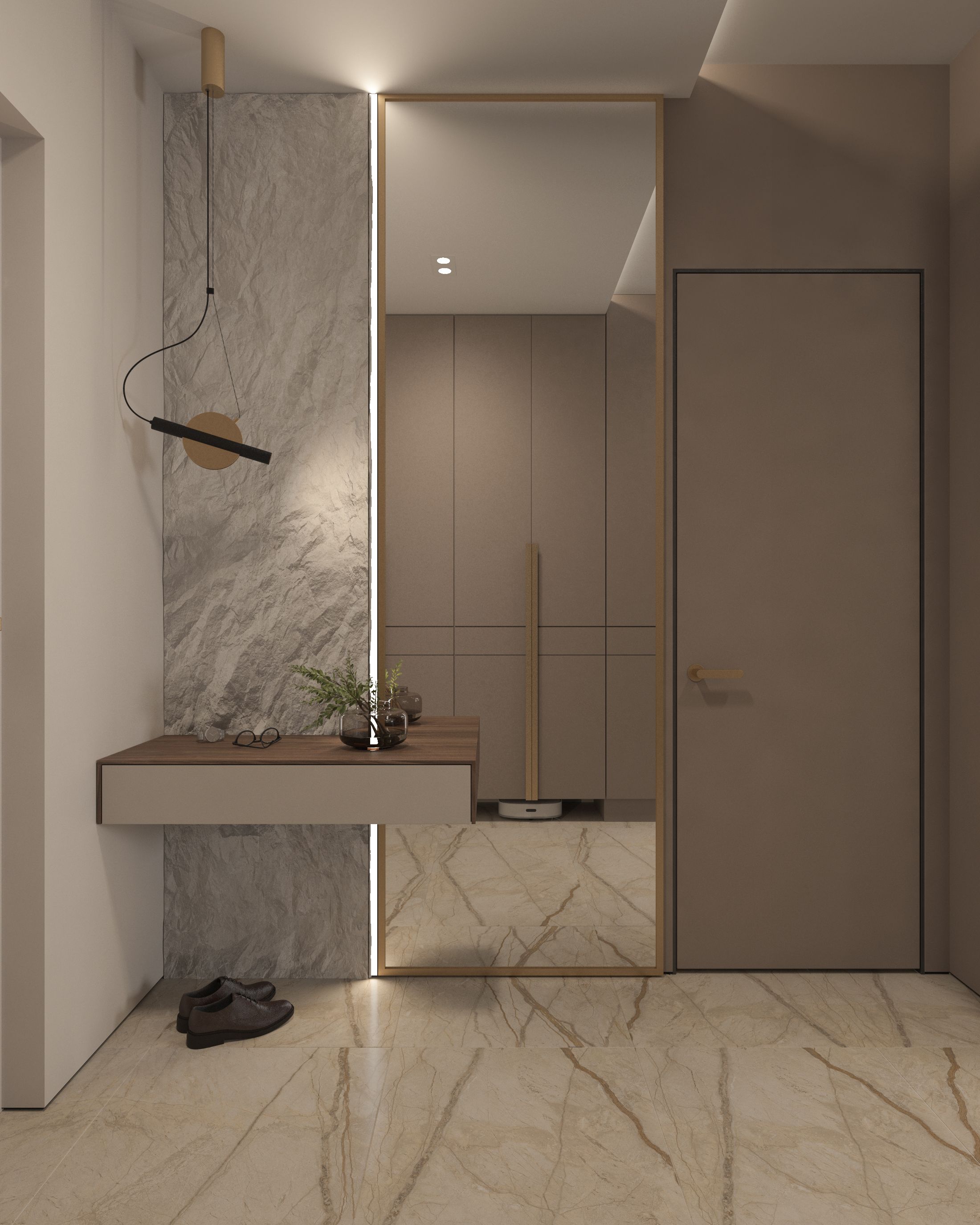
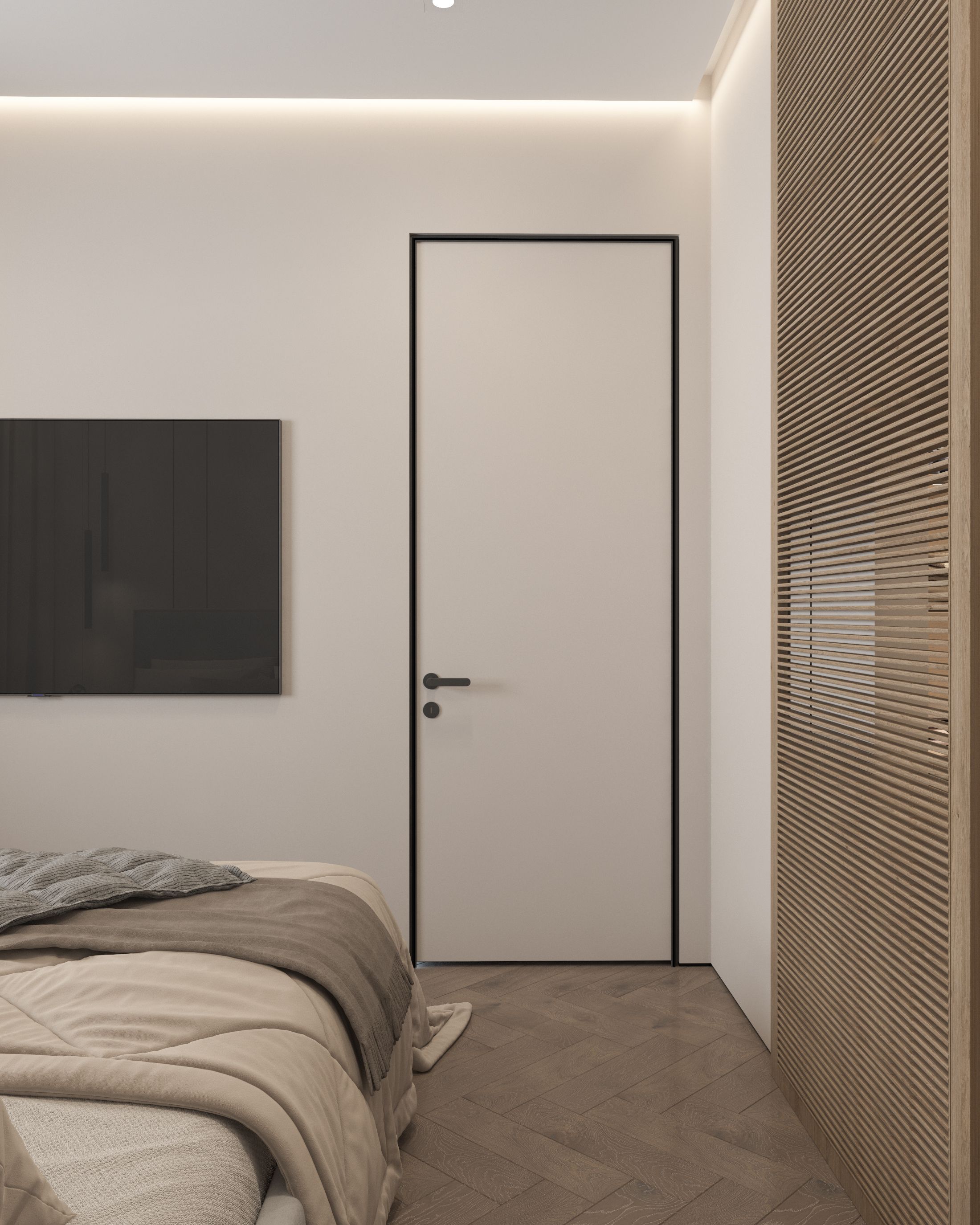
In the bedroom, zoning is achieved through furniture, a mirrored surface, a built-in wardrobe, and vertical lines on the wall behind the headboard. In the entrance hall, the same effect is created through a large mirror, console, stone panel, and vertical lighting.
Finishing Materials
Flooring
In the living areas, we used flooring with a warm wood texture, laid in a herringbone pattern. This pattern gives the interior a subtle classic foundation, while the calm tone keeps it from competing with the minimalist furniture.
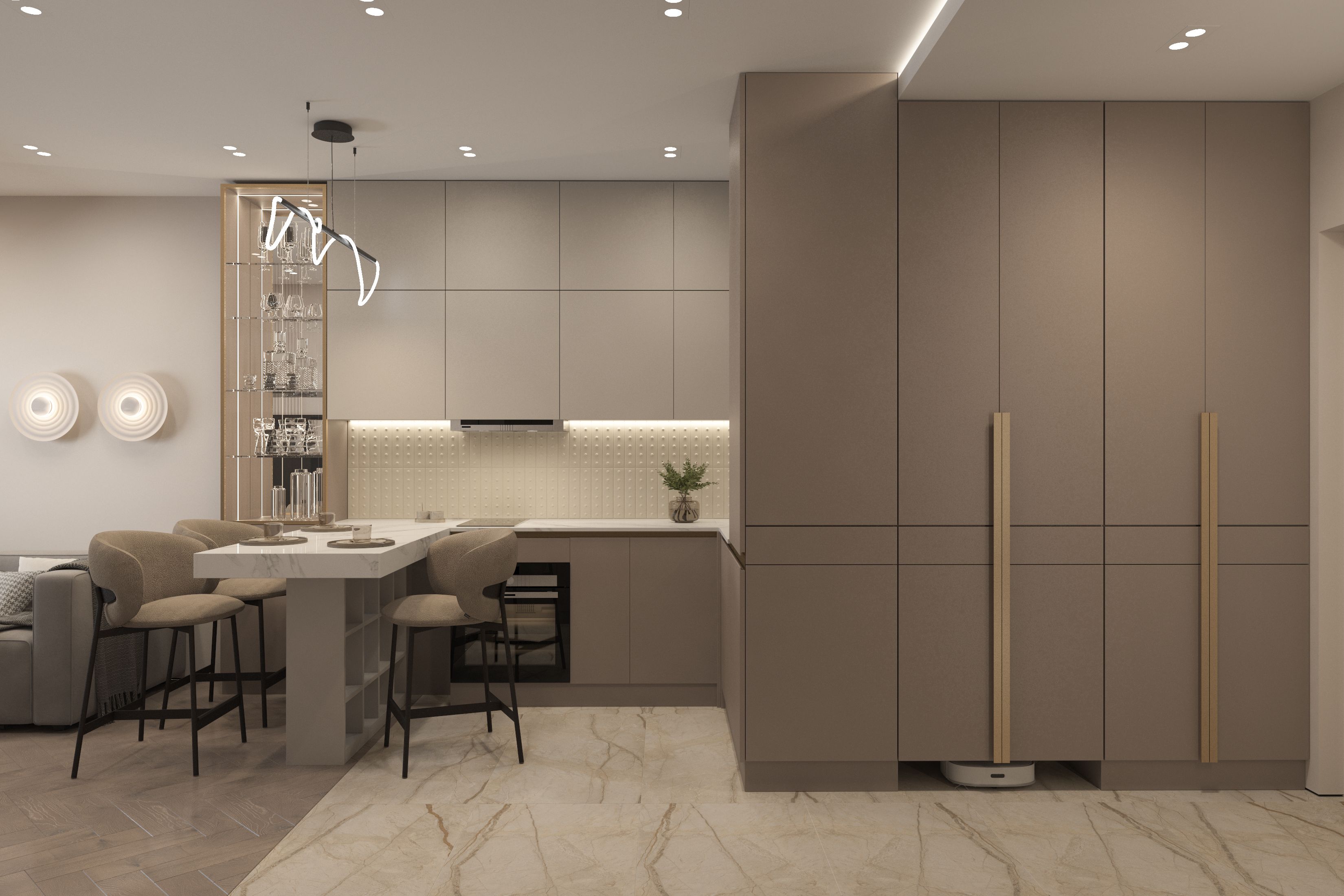
In the kitchen, entrance hall, and bathroom, large-format porcelain stoneware imitating light stone with expressive veining was used. This is a practical solution for areas with higher wear and moisture exposure. Visually, the stone connects different parts of the apartment and gives the interior a sense of solidity and quality.
Walls
The walls are finished in a calm, warm palette: beige, milky, sandy, and grey-brown shades. Texture plays an important role in the project: smooth painted surfaces are combined with vertical relief panels, large-format stone, furniture fronts, and wood.
In the kitchen-living room, the main background is light and neutral. Against it, the kitchen fronts, soft sofa, illuminated display cabinet, and decorative wall lights stand out clearly.
Vertical relief panels are used in the TV area. They create a soft play of light and shadow and add depth to the wall behind the television without introducing unnecessary decoration.
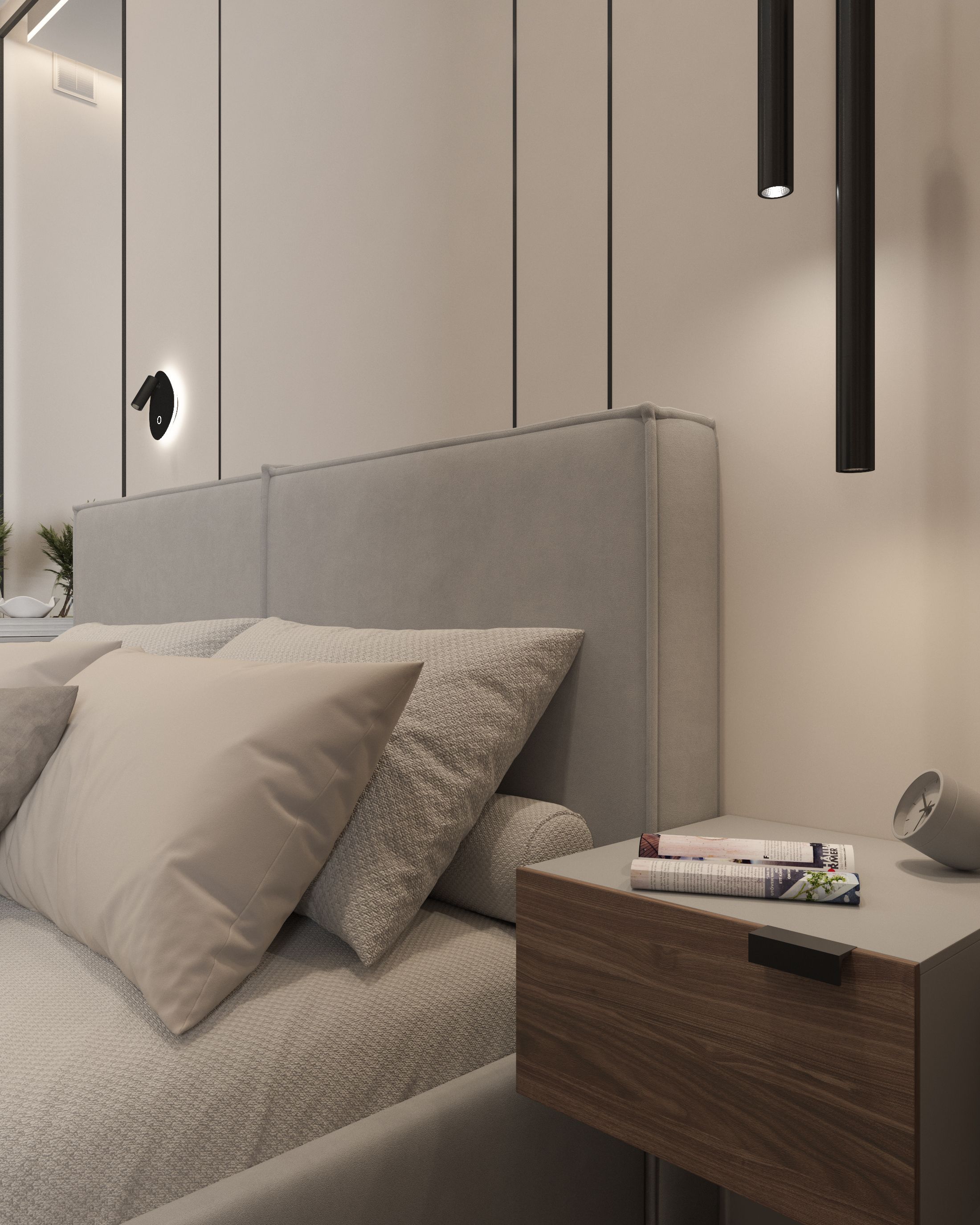
In the bedroom, the accent is placed on the wall behind the headboard: vertical graphic lines, a soft bed, pendant lights, and concealed lighting create a calm, hotel-like atmosphere.
In the bathroom, the main material is light marble-effect porcelain stoneware with warm veining. It unites the walls, floor, and bathtub area, visually expanding the room.
Ceiling
The ceilings are kept as clean as possible. The project uses recessed spotlights, concealed lighting, and local decorative pendants.
In the kitchen-living room, lighting helps separate different scenarios: technical lighting provides even illumination, the worktop lighting makes the kitchen practical, and the decorative pendant above the island adds individuality.
In the bedroom, perimeter concealed lighting and vertical pendants by the bed play an important role. This makes it possible to use both bright general lighting and more intimate evening scenarios.
Windows and Radiators
The windows are integrated into the interior as seamlessly as possible. Wooden reveals and blinds in the kitchen-living room support the warm palette of the project. In the bedroom, dense soft curtains make the room cozier, help darken the space, and add textile depth.
The radiators are also treated as part of the design rather than as random technical elements: their color and placement support the overall palette.
Storage Systems
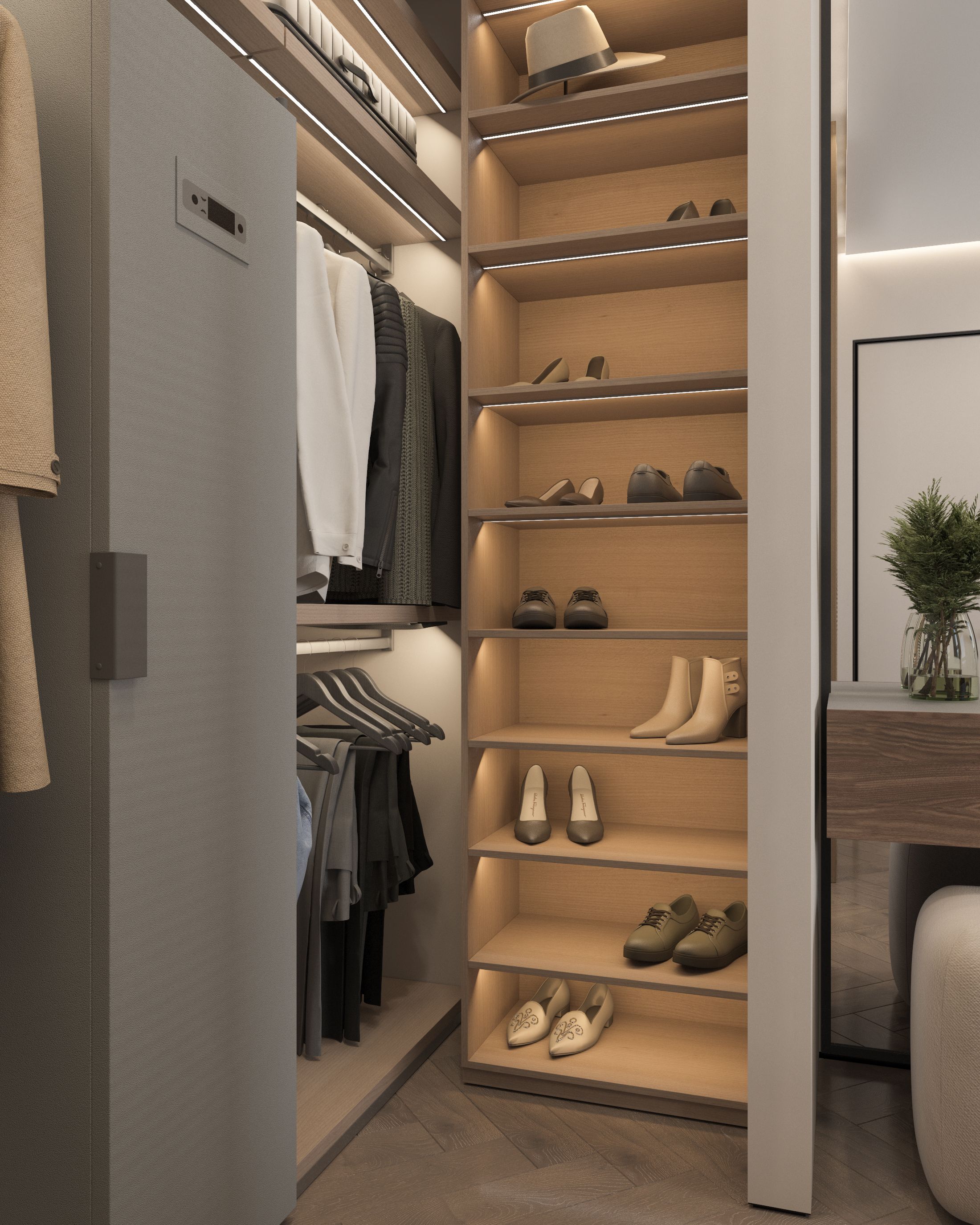
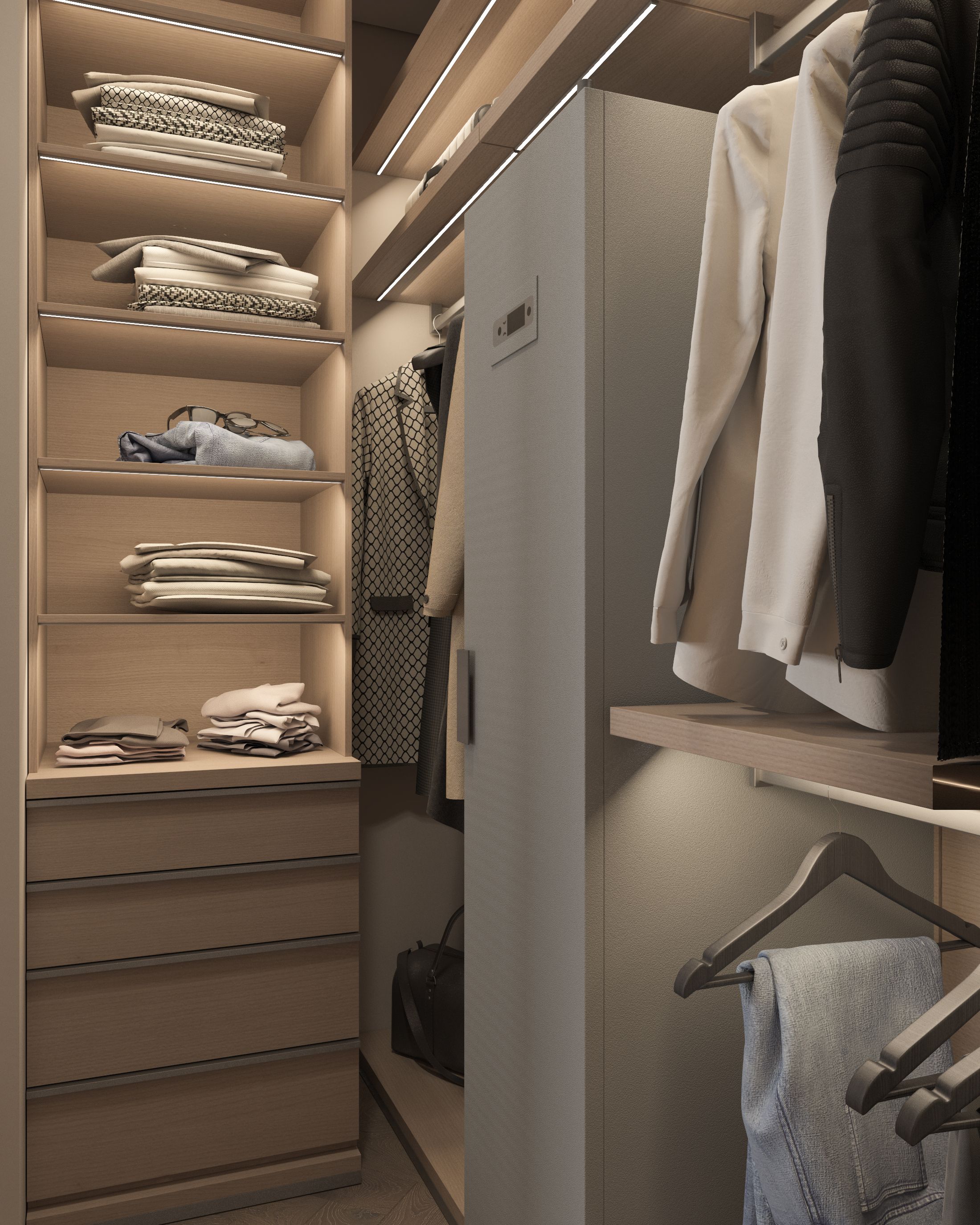
For a 48 m² apartment, storage is one of the key issues. Here, it is solved mainly through built-in and custom-made furniture, avoiding the visual fragmentation caused by separate freestanding wardrobes.
The entrance hall includes a tall wardrobe with smooth fronts. It accommodates outerwear, shoes, household items, and seasonal belongings. Visually, the wardrobe reads as part of the architecture rather than as a separate piece of furniture.
In the kitchen-living room, storage is concentrated in the kitchen area and display cabinet. The illuminated display cabinet is not only functional, but also decorative: it adds a vertical accent and makes the kitchen area feel more refined.
The wooden TV unit in the living room provides additional storage while remaining visually light thanks to its elongated horizontal form.
The bedroom includes a large storage system with fronts in a calm shade. There are also bedside tables and a suspended console by the mirror, which can function as either a vanity or a compact workspace.
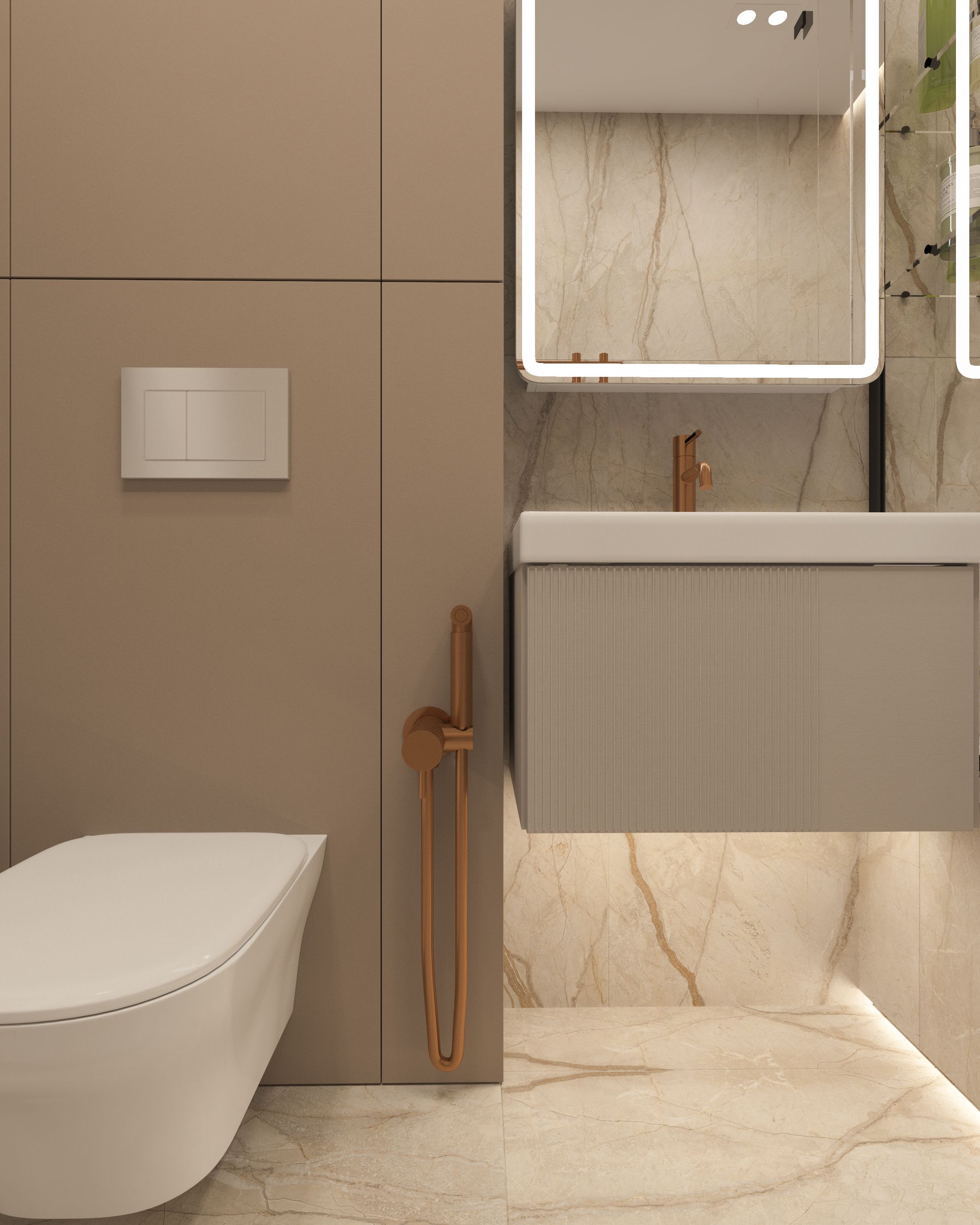
In the bathroom, storage is provided by the vanity unit and the cabinet above the concealed toilet system. This makes it possible to hide everyday items and preserve the visual clarity of the space.
Interior Style
This project belongs to the direction of soft minimalism.
Unlike strict minimalism, there is no cold emptiness or rigid graphic quality here. The interior is based on simple forms, softened by a warm palette, textiles, wood, stone, and delicate lighting.
The key features of this style in the project are:
simple geometry of the furniture and built-in elements;
absence of unnecessary decor;
a calm monochrome palette;
emphasis on textures rather than active color;
built-in storage systems;
scenario-based lighting;
natural visual motifs — wood, stone, textiles, and matte surfaces.
The interior feels modern, but not sterile. Its mood is masculine enough — restrained, composed, and functional — while remaining soft and universal, which is important for the future evolution of the owner’s lifestyle.
Color Palette
The main palette of the apartment is warm beige. It includes many complex undertones: sand, cappuccino, grey-beige, milky white, wood tones, bronze, and warm stone.
In the kitchen-living room, beige kitchen fronts, light stone, wood, a grey sofa, and warm lighting are used. This is the most multifunctional zone, so the color scheme here is calm and unifying.
In the bedroom, the palette becomes softer and more intimate: beige walls, a grey-beige headboard, wood, dense textiles, warm curtains, and muted lighting. This room is designed to encourage rest.
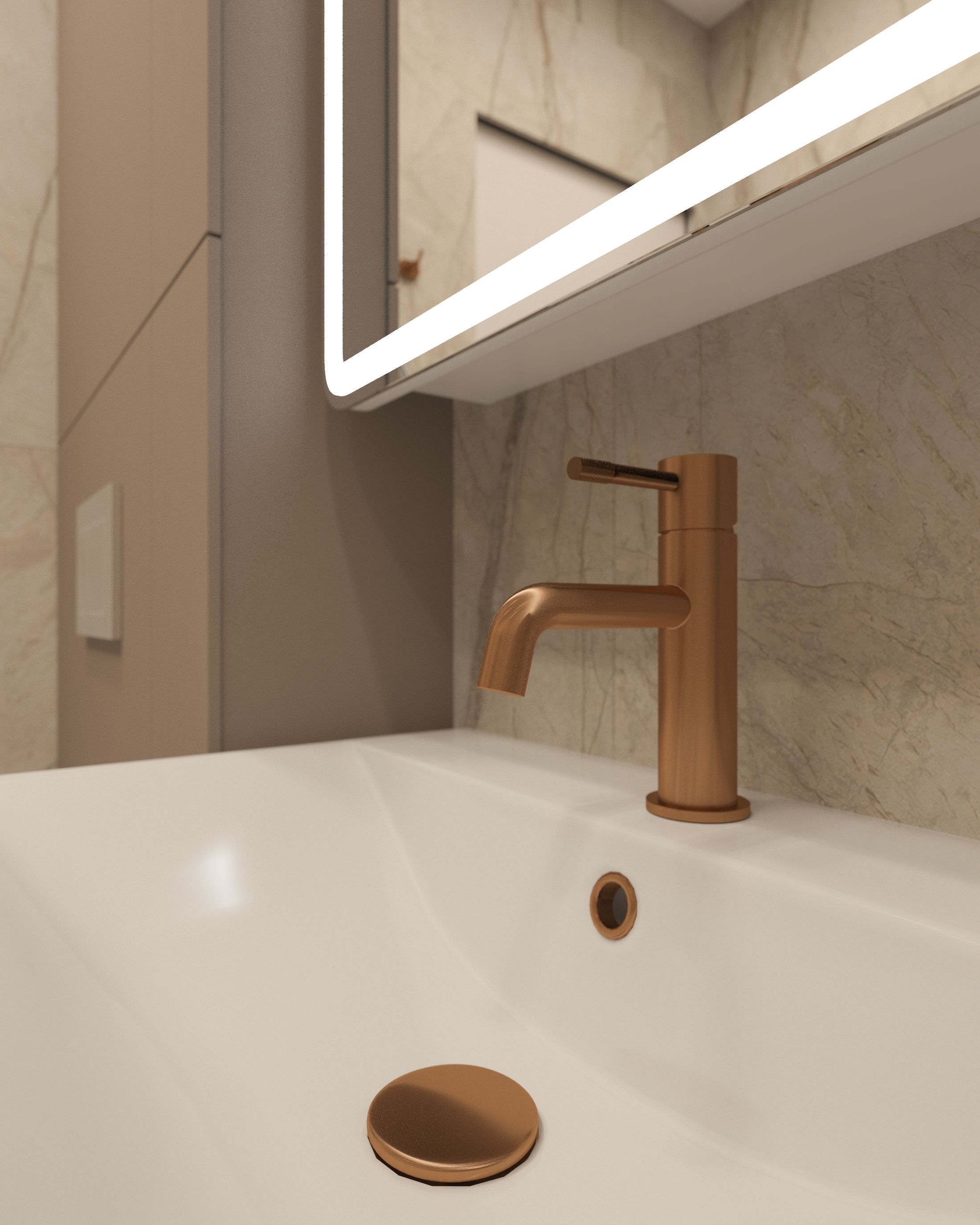
In the bathroom, the palette is based on a combination of light stone, beige fronts, and bronze sanitaryware. As a result, even a compact room feels cohesive and refined.
In the entrance hall, the contrast is more expressive: a stone panel, large mirror, dark door, bronze details, and a console with a wooden top. This creates a strong first impression upon entering the apartment.
Lighting
Lighting plays one of the main roles in the project. It does not simply illuminate the rooms; it shapes the mood and helps switch between different scenarios.
The kitchen-living room includes general ceiling lighting, task lighting for the kitchen work area, decorative lighting inside the display cabinet, and an accent pendant above the island. Special attention is given to the wall lights by the sofa: they provide soft local light and make the living area feel more intimate.
In the TV area, the lighting is integrated discreetly: spotlights and reflected light emphasize the wall texture without creating unnecessary glare.
The bedroom has several lighting scenarios: general light, concealed perimeter lighting, pendant lights by the bed, and a local wall light. This allows the room to work differently throughout the day — from bright morning lighting to soft evening light before sleep.
In the bathroom, the main accent is the illuminated mirror and concealed lighting beneath the vanity unit. This visually lightens the furniture and creates a floating effect.
In the entrance hall, spotlights, vertical lighting beside the mirror, and a decorative pendant are used. Thanks to this, the entrance area feels like a fully designed part of the interior rather than a purely technical zone.
Furniture
The furniture was selected according to the principles of calm geometry, tactile materials, and functionality.
In the kitchen-living room, the kitchen features laconic fronts without excessive detailing. The central island is clad in light stone with expressive veining, making it the visual focal point of the space. Bar stools with soft seats add comfort and support the overall mood.
The sofa is compact but visually soft. Its shape balances the strict lines of the kitchen and stone island. Decorative wall lights placed nearby make the lounge area feel cozier.
In the TV area, the wooden unit adds warmth and connects the interior with the window finishes, flooring, and furniture details.
In the bedroom, the central piece is the bed with a soft headboard. The rest of the furniture does not compete with it, but supports the calm image of the room: bedside tables, a suspended console, a built-in wardrobe, and a mirror.
In the entrance hall, the console, mirror, and wardrobe form a functional composition. It was important to make this area expressive without overloading it.
Decor and Textiles
Decor is used very sparingly in this project. Its role is taken on by materials, lighting, textures, and selected objects.
In the kitchen-living room, the illuminated display cabinet, wall lights, and pendant above the island act as decorative accents. In the TV area, the focus is on relief panels and restrained objects on the unit.
In the bedroom, textiles become the main decorative element: curtains, bedspread, pillows, and a soft headboard. Everything is selected in close tones, which makes the room feel cohesive and calm.
In the bathroom, the decoration comes from the finishes themselves: large-format stone, bronze sanitaryware, mirror lighting, and warm metal details.
The textiles in the project have a mostly natural feel: matte, soft, without shine or active prints. They are not used as decoration for its own sake, but to soften the architectural lines.
The Most Challenging Aspects of the Project
The main challenge was to create an interior within 48 m² that would not feel temporary or compromised.
Many functions had to be accommodated: a full kitchen, living room, additional sleeping place, bedroom, storage, bathroom with bathtub, entrance hall, and a place for receiving guests. At the same time, the apartment had to remain visually light.
The second challenge was working with the beige palette. A beige interior can easily become dull or flat. That is why it was important to use different textures and shades: matte fronts, wood, stone, relief panels, textiles, metal, glass, mirrors, and various lighting types.
The third task was to make the apartment universal. At present, it is intended for a young man, but in the future it should be able to adapt to life as a couple or a family with a child. For this reason, the interior is not tied to an overly specific personal style, and the furniture and planning solutions are designed for different scenarios.
The Designer’s Perspective
I wanted this apartment to be not just a beautiful visualization, but a truly viable urban interior. In small-space projects, it is always important to think ahead: how a person comes home, where they put their keys, where they store their shoes, how they host guests, where those guests can stay overnight, and how the apartment might change if another person begins living there.
In this project, we moved away from the conventional idea of a “bachelor apartment.” There are no deliberately dark walls, harsh contrasts, or overt masculinity. On the contrary, the interior turned out composed, soft, and calm. Its masculine quality comes not through color or brutality, but through logic, functionality, and clean solutions.
What I like about this apartment is that it is built not on showy effects, but on a sense of quality: the right lighting, good proportions, calm materials, and well-planned storage. This is an interior that should not become tiresome quickly. It creates a backdrop for life rather than taking all the attention for itself.
Beige soft minimalism in this project is not about emptiness. It is about quiet, order, and comfort in the big city.